2

Follow-up on this related MY question relating to the bracha on coffee or tea.

I initially surmised that to say "ha'etz" you must eat the fruit that protrudes from a tree branch. However, I have heard that one would say *ha'etz" on cinnamon sticks, which is the bark.

Maple syrup (the real stuff, not the "corny" Aunt Jemima) comes from the sap of sugar maple trees. (There are probably other types of drinkable tree sap, though, I can't think of others.) It is still part of the tree, but it's in liquid form.

I had heard from a rav that the bracha on maple syrup is shehakol, but, I'm not sure why it wouldn't be ha'etz considering that it's part of the tree.

DanF
  • 70,416
  • 8
  • 59
  • 244
  • related http://judaism.stackexchange.com/q/14171/759 – Double AA Jan 19 '16 at 23:36
  • 6
    possible dupe http://judaism.stackexchange.com/q/27110/759 – Double AA Jan 20 '16 at 00:00
  • If it is not the fruit of the tree it is hadomo not hoaitz – hazoriz Jan 20 '16 at 02:51
  • Orange juice is shehakol – hazoriz Jan 20 '16 at 02:52
  • 1
    @haz Some say OJ is haeitz – Double AA Jan 20 '16 at 14:37
  • @DoubleAA Acharoinim? Who? – hazoriz Jan 20 '16 at 15:28
  • @hazoriz The Chazon Ish, IINM (see http://hebrewbooks.org/pdfpager.aspx?req=14336&st=&pgnum=98). Probably a few others. R Yitzchak Abadi does as well I believe. – Double AA Jan 20 '16 at 15:35
  • Are you asking where it is being eaten on top of e.g. pancakes/waffles or eaten plain? In the former case, it should be tafel and not have its own bracha; in the latter, it's being eaten in an unusual way which should mean it should require a "shehakol" regardless of its source. Unless your asking about a hypothetical tree sap that is typically eaten plain... – Loewian Jan 20 '16 at 21:35
  • @Loewian I'm not talking about maple syrup on the pancakes. I know that's mezonot as in that case, it's tafel (secondary). I mean any type of tree sap, and used maple syrup only as an example, as it's the only edible tree sap that I can think of. I haven't decided if the answer, below, quite does it for me. I also haven't had the time to read the deleted answer. – DanF Jan 20 '16 at 22:18

1 Answers1

-1

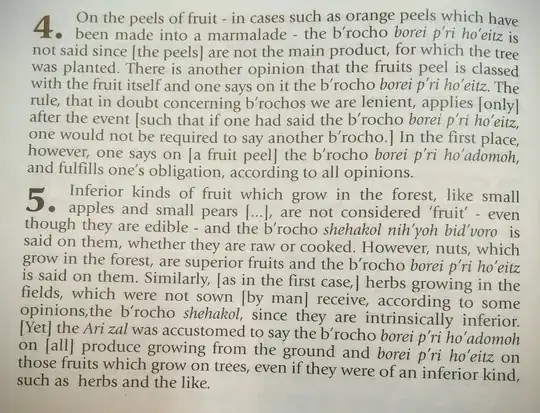
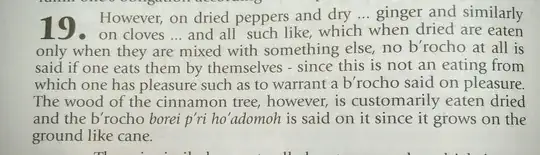
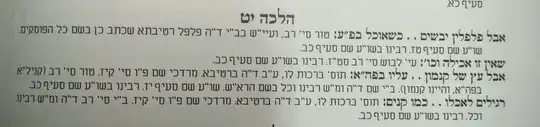
Cinnamon is hadomo OU guide , saider 6.19

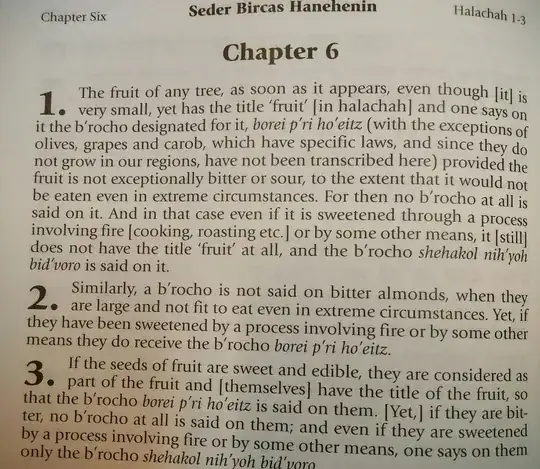
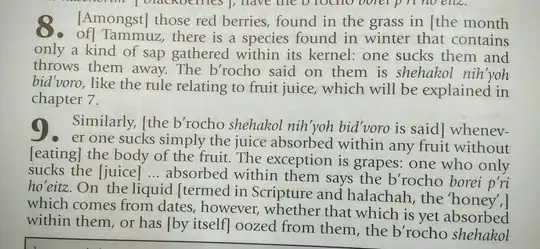
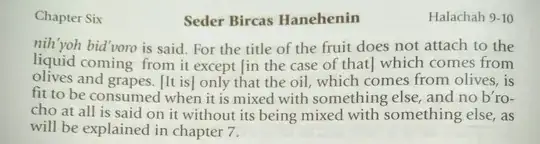
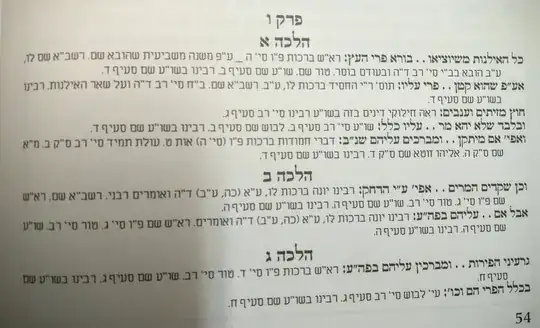
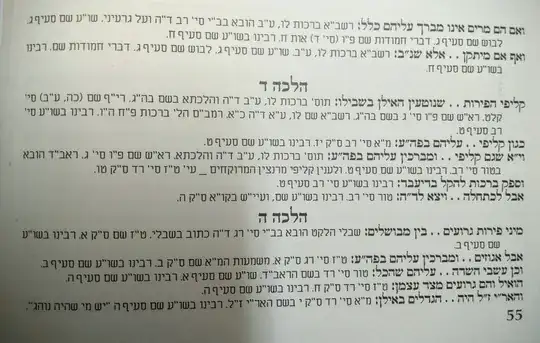
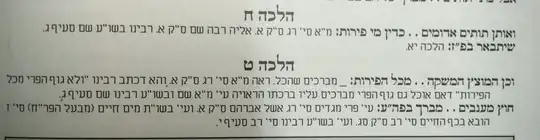
See laws below that only the friut of a tree has the borcho hoaitz, but liquids (excluding what comes from olives and graips) are shehakol

(Regarding smell, sap has the brocho as it comes from a tree atzai vsomim saider 11.6 source bach 216 d"h vhamstki in rashi and ran name, m"a 216.8, eliya raba 216.10)

Saider 6.1,2,3,4,5,8,9,19

enter image description here enter image description here enter image description here enter image description here enter image description here.
Footnotes.
enter image description here enter image description here enter image description here enter image description here enter image description here

hazoriz
  • 7,506
  • 2
  • 21
  • 53
  • After analyzing all the scanned pages, I'm still left with my original question not clearly answered, I'm afraid. The only halacha that seems close to answering the question is #9 which discusses sucking the juice out of the fruit. There does not seem to be any discussion regarding extracting the sap, directly. There is a discussion regarding almonds that have been sweetened by cooking and then it becomes "ha'etz". Maple syrup is usually inedible raw, and it is boiled before packaged for consumption. So, I don't know, from the above, if there is a difference between raw & boiled tree sap. – DanF Jan 20 '16 at 22:27
  • @DanF See this also http://i.stack.imgur.com/uW03e.jpg , the borcho hoaitz is on fruit as can be understood from the words of the brocho (he can praise G-d for somthing more special (it grows every year without planting), things that are not fruit that grow on a tree (since it is a solid) it is still considered somthing special and has the brocho of hadomo , things that are liquid are not special/respectful at all and have a brocho of shehakol (exemptions of oil, wine, and if the liquid gets the brocho of the friut that was cooked in it) – hazoriz Jan 21 '16 at 20:22
  • @DanF I found a better source http://i.stack.imgur.com/yZhDM.jpg http://i.stack.imgur.com/b7Lip.jpg (shulchan aruch harav 202.20) – hazoriz Jan 21 '16 at 20:27
  • That last source definitely is better. Perhaps you want to copy and paste that into your answer and delete the irrelevant parts? I don' t think the Hebrew is necessary as you have the English. What's interesting, here, is that this seems like a "classic" case of safek derbbanan l'kulah, and they are really extending this, somewhat to a safek of brachot so they state the somewhat universal rule "shehakol" for something that you can't quite identify. I got that, though, personally, I disagree with the analysis on this. But I have to accept the decision as they are smarter than I. – DanF Jan 21 '16 at 21:26