4

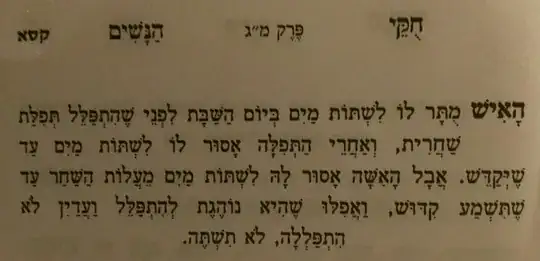
In Chukas Hanoshim of the Ben Ish Hai chapter 43 (below) he writes that women cannot drink anything on Shabbos morning until kidush, but men can drink water before shachris.

What might be his source/reasoning?
Does anyone argue with his decision?
enter image description here

mbloch
  • 51,726
  • 9
  • 92
  • 240
hazoriz
  • 7,506
  • 2
  • 21
  • 53
  • Closely related: http://judaism.stackexchange.com/q/64603 – msh210 Jan 10 '16 at 03:29
  • 1
    Where an answer brings an article that "A woman who normally davens may eat or drink before davening after reciting morning brochos.  According to some Poskim, (For the various details regarding this halachah, see Machze Eliyahu 33:3) on Shabbos if she needs to eat before davening, she is not required to recite Kiddush at that time.  Once she has completed davening Shachris, she must hear Kiddush before eating or drinking." Source http://www.star-k.org/articles/kashrus-kurrents/649/the-halachic-guide-to-kiddush/ – hazoriz Jan 10 '16 at 03:37
  • Here is the shut Machze Eliyahu 33 http://hebrewbooks.org/pdfpager.aspx?req=21547&pgnum=109 so their are those that disagree – hazoriz Jan 10 '16 at 03:51
  • I thought women were not technically obligated in the daytime kiddush? (This is why they can make Friday night kiddush even for a man, but not Saturday's -- or so I thought.) Am I wrong? – SAH Oct 10 '16 at 14:23
  • @SAH acording to http://www.torahmusings.com/2013/04/eating-or-drinking-before-kiddush/ it is a minority view – hazoriz Oct 10 '16 at 14:26

4 Answers4

5

The Ben Ish Chai explains his own position in Year 2 Parashat Bereishit #18

קידוש הלילה אינו תלוי בתפלת ערבית, שאם ירצה לקבל שבת מבעוד יום ולקדש ולאכול ולהתפלל ערבית בלילה, רשאי, ורק צריך שיתחיל לאכול חצי שעה קודם זמן קריאת-שמע; אבל קידוש היום תלוי בתפלה, דכל זמן שלא התפלל שחרית, לא חל עליו חובת קידוש; ולכן, ביום שבת בבוקר יוכל לשתות מים קודם תפלה, מפני שכיון שלא התפלל, לא חל עליו חובת קידוש. וכל זה הוא באנשים דחל עליהם חיוב תפלה בבוקר אחר עמוד השחר, אבל הנשים, משעלה עמוד השחר חל עליהם חובת קידוש, ואסורין לשתות מים קודם קידוש; מפני דיש אומרים: הנשים קיימי אדינא דאורייתא, שאין להם נוסח קבוע ולא זמן קבוע לתפילה, ובפעם אחד ביום שיאמרו נוסח תפילה, יצאו ידי חובה, ואם כן לדידהו, אין הקידוש תלוי בתפילה, ולפיכך, משעלה עמוד השחר אסורין לטעום מים קודם קידוש, וכמ"ש הרב "חסד לאברהם" בתשובה, בא"ח, סי' וא"ו; יע"ש.‏
...women from dawn are obligated in Kiddush, and are [hence] forbidden to drink water before Kiddush, for there are those who say that women follow the biblical rule of having no fixed text or times for prayer, and in one time in the day when they say a prayer they fulfill their obligation, and if so for them Kiddush is not dependent on prayer, and therefore from dawn they are prohibited to taste water before Kiddush... (my translation of the part I italicized)

mbloch
  • 51,726
  • 9
  • 92
  • 240
Double AA
  • 98,894
  • 6
  • 250
  • 713
2

There is a significant mahloket poskim regarding a woman's prayer obligation. In general sefardim poskim hold that a short prayer is enough for a woman to discharge her prayer obligation (see e.g., Yalkut Yosef's introduction to Hilkhot Tfila or Yabiah Omer vol. 6:17 as cited here). There are different ways to understand short prayer, e.g., a statement of praise, a short supplication such as "make your Torah always desirable to me" and a brief statement of thanks.

Therefore I assume the Ben Ish Hai sees no reason that a woman should not pray a short prayer first then make kiddush right away and then eat or drink.

Since a man's prayer obligation takes much longer, there is a leniency to drink before shaharit (see here for more sources).

Many poskim disagree with the Ben Ish Hai, e.g., the Shmirat Shabat Kehilchata (52:13) explicitly says

  • a woman who is used to always say shacharit cannot eat before kiddush
  • however she can eat if it is her habit after she (1) has made just a short supplication, (2) does not recite shaharit at all or (3) does so only after eating
  • she can eat before praying and before kiddush if she is weak
mbloch
  • 51,726
  • 9
  • 92
  • 240
  • Does the Ben Ish Chai hold like R Ovadiah here? ROY's position is quite novel and I see no reason to think Sefardim in general rule that way, let alone the BIC who he often differs with. It's highly debatable if the ShA even agrees with ROY here. – Double AA Jan 10 '16 at 15:08
  • @DoubleAA R Ovadia Yosef follows the opinion of the Rambam (Hilkhot Tfila 1:1 and 1:2), see also Magen Avraham 106:2 who says following the Rambam many women were praying a short prayer and not the shmonei esrei. My suggestion is that the Ben Ish Hai follows the same reasoning therefore doesn't allow drinking before the (short) prayer.

    Sefardim definitely do follow R Ovadia Yosef although not all agree on that very point (I seem to remember R Bentzion Abba Shaul doesn't). I see no other way to explain the Ben Ish Hai but would love to hear other views

    – mbloch Jan 10 '16 at 15:30
  • No, he doesn't. The Rambam doesn't hold that as explicit in 6:10 (note his inclusion of Ketanim there). The MA does NOT hold that the Rambam holds that. You are misreading the MA as he only says if someone had the opinion that women are exempt then they must agree with Rambam about Tefila being Deorayta, though he doesn't name any rabbi who holds such a way (because no one ever did). Also, not all Sefardim follow ROY on everything or anything, just as not all Ashkenazim follow R Moshe Feinstein or the Lubavitcher Rebbe. Sefardim are no more monolithic than Ashkenazim. – Double AA Jan 10 '16 at 15:56
  • That is how R Yithak Yaacov Fuchs understands the Rambam in Halichot Bat Israel (p. 22). And how R David Sperling quotes the MA on Nishmat's site "According to the Rambam, from the Torah it is enough to pray once a day, in any form one chooses. Therefore most women are accustomed not to pray regularly, because they say a request immediately upon arising which suffices from the Torah. And it is possible that the Rabbis did not obligate them more than this. The Ramban and most of the poskim are of the opinion that prayer is [entirely] rabbinic in nature. – mbloch Jan 10 '16 at 16:03
  • R Sperling is agreeing with me. You are misreading him as well. Note how he never says that the Rambam says women need not pray regularly. He wouldn't say this, bc the Rambam never said anything like that. I haven't checking R Fuchs' work, but he either agrees with me or is being imprecise in his language, or is accidentally mistaken. There isn't anything to argue about here really. Just read the Rambam and MA. It's abundantly clear. – Double AA Jan 10 '16 at 17:20
  • IAE, whether or not the position of ROY has any traditional backing, the fact is you have no reason to assume the BIC held that way. Please cite that he does to make this answer reasonable. – Double AA Jan 10 '16 at 17:39
  • @DoubleAA just to be clear, I never suggested that the Rambam said women shouldn't pray regularly. Just that a "basic prayer" or "short prayer" is enough, which is a combination of shvach, bakasha, hodaa. See the beginning of my answer or my first comment above. Maybe we diverged at some point leading to some misunderstanding. On the BIC's position, I see no other way to explain it than the way I did which is is to trace the BIC's reasoning to the earlier poskim who are consistent with his line of thinking. B'shalom – mbloch Jan 10 '16 at 17:44
  • I hope I was clear too that Rmbam clearly obligates women in full thrice daily regular prayer just like men, in accordance with the unanimous position of Rishonim. RSperling never challenged that. When I said "Note how he never says that the Rambam says women need not pray regularly" I used 'regularly' to mean 'at specific times of day with specific wordings'. There is no Rishon who writes that women have different obligations from men in this regard, despite the fact that they all knew women. The fact that such an opinion could theoretically be possible was first suggested in the 17th century – Double AA Jan 10 '16 at 17:54
  • @Double AA +1 on your answer above - on your last comment I found the Yabia Omer I had seen on women tfila. Please note it is not directly connected to my own answer but adresses my point on sfardic poskim and woman tfila (see 19 here https://imgur.com/gallery/WeQPBAU) - hope I didn't misunderstand him – mbloch Jan 10 '16 at 20:20
  • I don't want secondary sources. Just quote me a Rishon's words where he explicitly differentiates and says "Unlike men, women are only obligated to do XYZ regarding Tefillah". It's a day-to-day practicaly relevant halachic detail about which certainly some Rishon should have mentioned it and discussed it, yet no one [at least before the 17th century] ever said such a thing. – Double AA Jan 10 '16 at 20:57
  • Highly relevant source to this discussion in the comments, explaining Rambam's perspective on prayer: https://www.jofa.org/sites/default/files/uploaded_files/10002_u/00861.pdf – mbloch Mar 25 '16 at 14:28
  • That's a very poor presentation of the Rambam, completely ignoring 6:10. Notice how it doesn't cite any sources on the Rambam at all for it's conclusions about the so called "Rambam's position". – Double AA Mar 25 '16 at 15:42
  • If you meant R Fuchs on page 32 (I don't see anything on 22), then that is a false statement about what R Fuchs writes there. – Double AA Mar 25 '16 at 17:03
  • @DoubleAA re R Fuchs, we might not have the same edition, I have the combined vol 1&2 edition from 2009. I made no mistake in representing his words. He writes pp. 21-22 that "according to the Rambam there is a Torah obligation of tfila which can be fulfilled by saying almost any kind of short prayer any time during the day. The time-bound aspects of this mitzvah derive from Rabbinic decrees which set forth specific hours and wording. In his view the mitzvah requiring women to pray refers only to the commandment as required by Torah laws." – mbloch Mar 26 '16 at 19:21
  • R Fuchs continues "The MA 106:2 reports that, following the Rambam ruling, it was customary for women to say some short prayer each day but not the shmonei esrei." – mbloch Mar 26 '16 at 19:22
  • (I was looking at a Hebrew edition.) Then it must be a translator's error, as those are demonstrably factually inaccurate claims. Just read the Rambam and MA. – Double AA Mar 27 '16 at 01:33
2

The Shulchan Aruch HaRav says (289:2)

ותקנו חכמים לקדש על היין קודם סעודת שחרית כמו קודם סעודת הלילה לפי שכבוד יום קודם לכבוד לילה ואם לא יקדש ביום על היין יהא כבוד לילה עודף על כבוד יום מכל מקום לא תקנו לברך ברכת הקידוש שבירך בלילה אלא די בברכת בורא פרי הגפן שיברך על היין כדי שיהא היכר בזה שקידוש זה אינו אלא מדברי סופרים ומכל מקום גם זה הקידוש צריך שיהיה במקום סעודה ושלא יטעום כלום קודם לו כמו בקידוש הלילה אך מותר לשתות מים קודם תפלת השחר מפני שעדיין לא חל עליו חובת קידוש.

However, it's permitted to drink water before Shacharis because he still has no obligation to do Kiddush

He can't do Kiddush as he can't eat the meal then, as one is only allowed to drink water before Davening.

However, women are allowed to eat before Davening. So they may make Kiddush from the early morning, ergo, they may not drink from the morning.

ertert3terte
  • 40,485
  • 7
  • 96
  • 205
  • "Women, also, may not eat before davening." From your link... – Double AA Jan 10 '16 at 15:07
  • @DoubleAA But many women eat after reciting Birchos ha-shachar since some poskim rule that they fulfill their minimum obligation of davening by reciting any supplication(20). They may rely on this leniency even though they are planning to daven the entire davening later on(21). – ertert3terte Jan 10 '16 at 17:06
  • Even accd to that minority opinion they would only be obligated in Kiddush only after saying those blessings, so they could drink water beforehand, no? – Double AA Jan 10 '16 at 17:19
1

As in the secondary source you linked in the comments:

A woman who normally davens may eat or drink before davening after reciting morning brochos.

Since that is the case, there's no reason she shouldn't be obligated to first make kiddush. A man who drinks water however, is only doing so because it's not really considered eating before davening. Furthermore, to make kiddush before davening would be forbidden for him as part of his prohibition of eating before prayer. (Those who argue with the Ben Ish Chai maintain that the drinking of water by a woman is not grouped together with her general allowance to eat a full meal and is instead grouped together with a man's allowance to drink water.)

Loewian
  • 17,746
  • 2
  • 29
  • 60