If you plant a seed shortly before the end of shabbat (zoraya) and then un-bury it after shabbat, or you put an uncooked food into an oven and then take it out within seconds without it having baked (ofeh). Have you transgressed a melacha or not?
Asked
Active
Viewed 311 times
14

msh210
- 73,729
- 12
- 120
- 359

not-allowed to change my name
- 12,380
- 1
- 35
- 90
-
2Or if you turn on and off a light? ;) – HodofHod Dec 27 '12 at 04:53
-
@HodofHod What melacha is involved in turning off a light? There's no charcoal created so at best it's kibui sheino tzarich legufo. – Double AA Dec 27 '12 at 05:10
-
2@DoubleAA I didn't mean that there was one, I was giving an example of one that's relatively common. – HodofHod Dec 27 '12 at 05:12
-
1see the igley tal, it's a machlokes – Dec 27 '12 at 14:34
-
I'd also like to know if this means that planting the seed (or turning on the oven) was permitted b'dieved. – SAH Aug 20 '14 at 16:02
-
@DoubleAA But turning off a light is still rabbinically prohibited (as a melacha sh'eino tzarich legufo, like you said). So maybe you haven't transgressed a melacha, but you still aren't allowed to do it (turn the light on or off). I wish the question were broader to include the issue of rabbinic prohibitions. – SAH Aug 26 '14 at 22:41
3 Answers
6
One of the principles enumerated by the Tif'eres Yisra'el in Kalkeles Shabbas to be liable is that the mal'achah done has to endure; if it doesn't endure, he is not liable for it (though it is still forbidden). However, he says that for some mel'achos, among them planting, one is liable for them even if it doesn't endure. (I did read in the name of the Aruch that a person is liable for planting even only if it endures; however, I can't remember where I read that and I can't find a reference to that Aruch.)


-
Maybe you aren't liable--but the action is still rabbinically prohibited, right? – SAH Aug 26 '14 at 22:41
3
this is a famous dispute between the Minchas Chinuch and the Rashash in Shabbos (73a)- the Minchas Chinuch says that if one removed the seed before the zriah he is still liable, however the rashash says one is not liable, the rashash compares to the din of baking, that if one stopped the baking before it was finsihed one is not liable for bishul, since the melocho is the finised product of the baking. (see the Iglei Tal on the Minchas Chinuch)
This is the Minchas Chinuch:
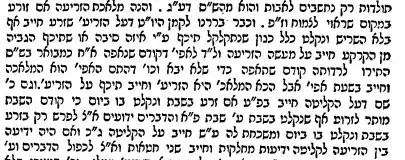

Shoel U'Meishiv
- 15,505
- 1
- 37
- 80
-
"Before the zriah"="Before the planting"? What does it mean to remove a seed "before the planting"? – SAH Aug 26 '14 at 22:29
-
2
In short, no you have not been mechallel shabbos. However there's an issur d'rabonon in both cases. In the case of putting something into the oven, the food has to reach "ochel Ben deurso". Which is about 1/3 cooked in order to violate shabbos. In the case of the seed it's trickier aside from the rabbinic prohibition of handling the seed (because it's muktzeh) it can be more severe. If your intent was to take it out before it sprouted roots, then you wouldn't be obligated to bring a sin offering (meaning it's only a rabbinical prohibition which is under not doing half melachos.) however If your intention was for it to sprout roots then you WOULD have indeed been mechallel shabbos. Because the normal way to seed is to plant seeds into the ground and wait past that day for it to sprout roots.

David Feigen
- 1,942
- 12
- 21
-
1Hi, I like your answer, but can you be a little clearer about which "prohibitions" and "violations" you mention are Rabbinic vs. Biblical? For example: – SAH Aug 26 '14 at 22:31
-
1"In the case of putting something into the oven, the food has to reach "ochel Ben deurso". Which is about 1/3 cooked in order to violate shabbos. " =d'rabanan or d'oraita?/ "If your intent was to take it out before it sprouted roots, then you wouldn't be obligated to bring a sin offering (meaning it's only a rabbinical prohibition which is under not doing half melachos.)"--What is the rabbinical prohibition besides muktzeh?/
"however If your intention was for it to sprout roots then you WOULD have indeed been mechallel shabbos." =Biblically?
– SAH Aug 26 '14 at 22:31 -
Whenever I say "violate shabbos" or "chillul shabbos" I'm talking about biblical prohibitions. You don't use those terms by rabbinic prohibitions. – David Feigen Aug 27 '14 at 06:10
-
Really? Does "mechalel Shabbos" also refer only to Biblical? ....If so, how do we refer to rabbinical violations of Shabbat? Thanks – SAH Aug 28 '14 at 02:59
-
1We refer to rabbinic prohibitions as "shvusim" not "chillul " the reason being is that to be mechallel shabbos it has to be pikuach nefesh, however for shvusim it doesn't have to be pikuach nefesh. Different shvusim could be waived for different reasons. So as not to confuse the public and to have better clarity they are labeled differently. – David Feigen Aug 30 '14 at 00:09