R. Yosef Qafih in his commentary writes without elaboration on 8:1:
ואין זה סותר לעומק הדברים האמורים במו"נ ח"ב פ' לג
And this does not contradict the depth of the matter as brought down
in MN Sec. 2, Ch. 33.
Presumably this is intended in consonance with his statement in comment 13 on H. Yesode ha-Torah 8:3 (H/T @Nahum):
הדברים אמורים כאן על דרך ההטפה אבל ברור בדעת רבנו שכל אחד שמע כפי
רמתו, וכמשפט כל חזון, ועיין מו”נ ח’ב סוף פ' לב, ופ’ לג, שם הביא לשון
חז"ל במכילתא שמות יט כט משה מחיצה בפני עצמה ואהרן מחיצה בפני עצמה.
The matters discussed here are conveyed by means of sermonizing,
however it is clear that according to Rabbenu that each one heard
according to his capacity, and each had a vision as adjudged. See MN
Sec 2, end of Ch. 32 and Ch. 33, where the language of Hazal from
Mekhiltah Ex. 19:29 is brought that Moses had is own partition and
Aaron had his own partition.
R. Qafih explains that H. Yesode ha-Torah 8:1 utilizes an exaggerated sermonic style to communicate the idea, and accordingly it ought not be understood as contradicting MN 2:32-33 where the unique level of each individual dictated the quality of their respective prophetic experience.
R. Isaac Sheilat takes a similar tack and elaborates further (Haqdamoth haRambam leMishnah, pp. 70-71):
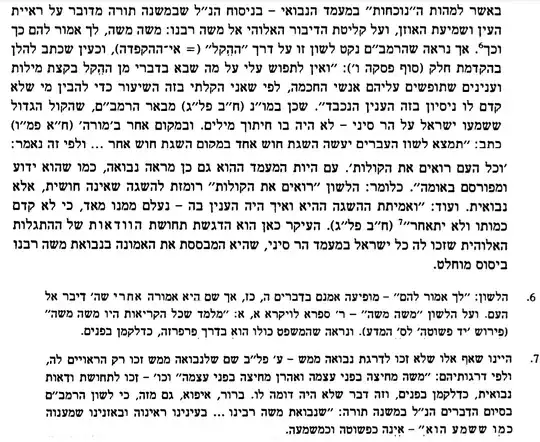
In the above wording of the Mishneh Torah, characterizing the
prophetic stature of the “presence” [of the Israelites at Sinai], it
discusses seeing with the eye and hearing with the ear, and about
Moses receiving the divine utterance: “Moses Moses, go tell them such
and such” (H. Yesode ha-Torah 8:1). It seems that the Rambam employed
this language by means of "hahaqal" (i.e. with imprecision), akin to
what he wrote in his introduction to his commentary on Heleq (end of
paragraph 6): " And don't try to come after me concerning that which
I've said in a shallow unelaborated way about matters that men of
wisdom grasp, for I have made the lesson easier so that those without
any prior instruction in these exalted matters could understand.'' For
in MN (Sec. 2, Ch. 33) the Rambam explains that the great voice that
the Israelites heard at Sinai - the words were undifferentiated. And
in another place in the MN (Sec. 1, Ch. 46) he wrote: “You'll find
that the Hebrew language substitutes the apprehension made by one
sense for that made by another... in conformity with this it is said,
‘and all the people saw the sounds’ (Ex. 20:15) although this station
also constituted a vision of prophecy, as is well known and
universally admitted in our community.” Which is to say: the language
of “seeing the sounds” hints to an apprehension that is not
sense-based, but rather is prophetic. And further (Sec. 2, Ch. 33):
“The true reality of that apprehension and its modality are quite
hidden from us, for nothing like it happened before and will not
happen after.” The fundament of the matter here is to emphasize the
sense of certainty of the divine revelation that all Israel merited at
Mount Sinai, which establishes the belief in the prophecy of Moses
with absolute certainty.
R. Sheilat here indicates that the language employed in H. Yesode ha-Torah 8:1 utilizes imprecise language in service of the overarching goal of conveying to the reader the weight of the Israelite experience, i.e. that trust in Mosaic prophecy was impressed upon them by the Sinaitic revelation. It is not intended to accurately describe the nuances of the prophetic experience which MN Sec. 2, Ch. 32-33 explain in greater detail.
If I come across any other explanations I'll update.


