How can one determine when the word "את" is pronounced with a t'zayray and when it is pronounced with a se'gol?
Asked
Active
Viewed 87 times

2 Answers
1
The difference is whether it has a trop mark on it. If it has a trop then it is pronounced with a tzayray and if it doesn’t have a trop it is a segol.

user133912
- 19
- 2
-
If it has a tzzyray it's pronounced with a tzayray; if it has a segol it's pronounced with a segol. – Alex Feb 25 '21 at 01:16
-
@Alex I can’t argue with that. but I am explaining when it would have a tzayray or a segol – user133912 Feb 25 '21 at 01:19
-
1Is the trop the cause of the tzayray/segol, the effect of the tzayray/segol, or are they just correlated effects of something else? If it is just meant as a heuristic, is it common to find verses printed with trop but without nekudot? – Alex Feb 25 '21 at 01:22
1
With four exceptions, it is always אֵת (with a tsere) when accented/stand-alone, and it is always אֶת (with a segol) when unaccented/followed by a maqef. This is an example of the general phenomenon of unaccented syllables showing vowel reduction.
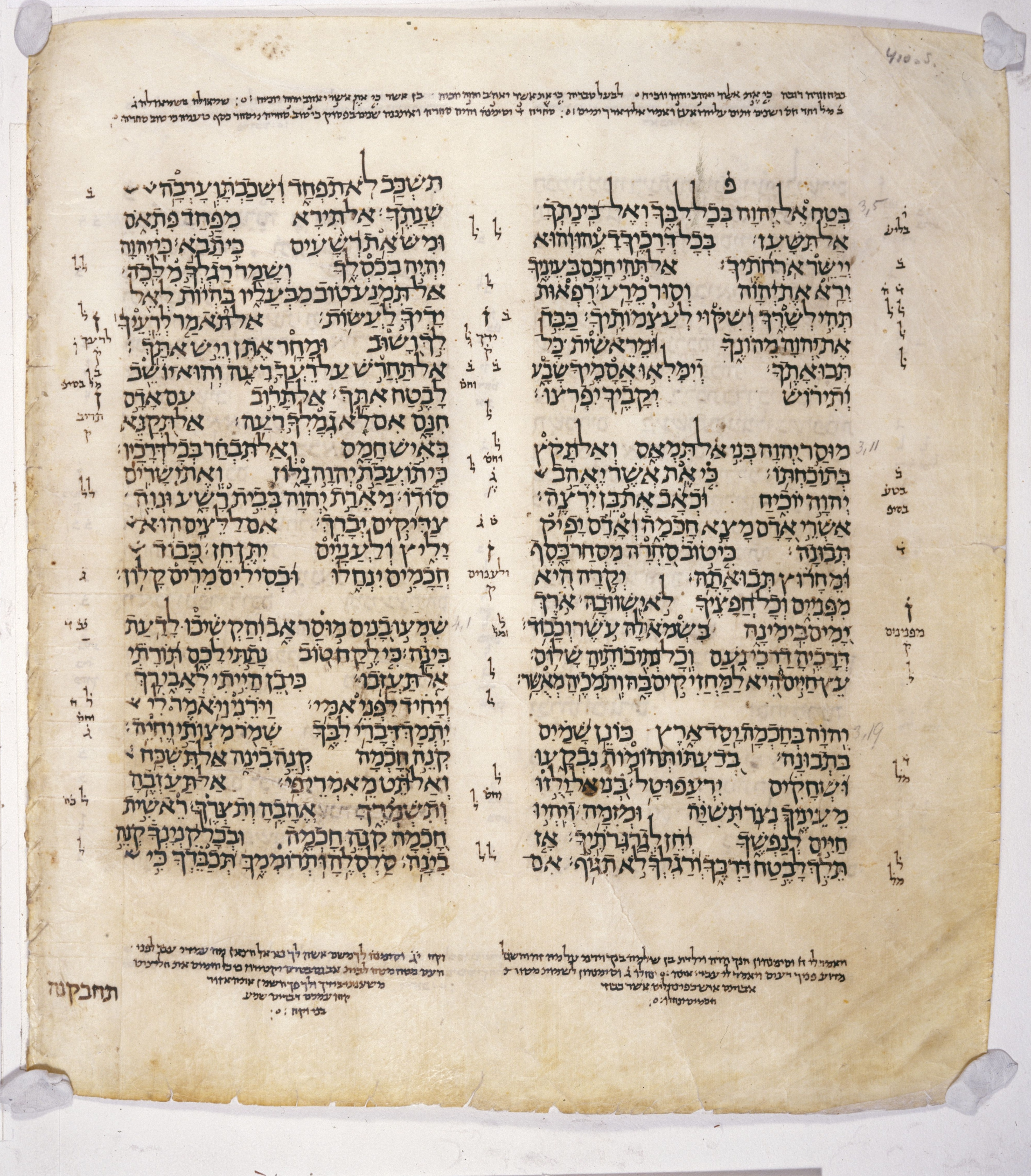
The exceptions (indicated by the masorah) with an unexpected segol are Psalms 47:5, 60:2, and Proverbs 3:12. I'd guess that these have an implied maqef, but who knows for certain. There is one exception with an unexpected tsere: Job 41:26; Geoffrey Khan points out (on p513) that when a word like את is followed by a maqef but is at least one syllable away from the main accent (like in our case), it will remain unreduced (other examples are Ruth 3:17, Sam 1:14:4, ...).

magicker72
- 9,904
- 28
- 68
-
Worth noting that the Masorah Gedolah lists three different accentuations for Prov 3:12; however, all have segol. – magicker72 Feb 25 '21 at 01:56