3

One easy way to make boiled or stir-fried vegetables more exciting is to drizzle soy sauce and sesame oil.

To diversify the flavor, and while still taking inspiration from Korean and Japanese kitchens, I have attempted to dissolve/dilute a bit of:

fermented and unfermented soybean paste

  • Korean, light-colored, fermented soybean paste,
  • Korean, dark-colored, fermented soybean paste, and
  • Japanese soybean (miso) paste

in some water and add to various dishes such as:

  • boiled vegetables,
  • stir-fried vegetables, and
  • vegetable broth and (largely unseasoned) homemade chicken broth

but the outcome is far from exciting. It doesn't come close to the flavors of even the basic dishes served at Korean and Japanese restaurants.

What is the correct way to use fermented (and unfermented) soybean paste?

(Hint: a little of any of these goes a long way; beware of buying too much too soon and being unable to use it before expiration.)

lambshaanxy
  • 1,539
  • 2
  • 16
  • 28
Sam7919
  • 815
  • 1
  • 8
  • 21

3 Answers3

7

First of all, the Korean middle one is not soybean paste at all, but chunjang (춘장), a black bean paste. This is used as a condiment for stir-fries, in particular the noodle dish jjajangmyeon (as shown on the package); it's not suitable for soups.

The leftmost one is Korean soybean paste aka doenjang (된장, you can spot the characters in the top left corner). Unlike miso, doenjang is not "diluted" with rice, so it tastes stronger. The most popular way to eat this (and also my favorite) is as the base for doenjang-jjigae, a tasty stew.

Finally, the Japanese one on the right is a "nothing added" (無添加 mutenka) plain miso, which means it's missing the other key ingredient for miso soup: dashi stock, which adds salt and umami flavors. Dashi can be made from bonito (katsuo) or kelp and is easily purchased in "instant" powder form, just add a pinch (quarter tsp or so per bowl, it's strong stuff!) to the boiling water and mix in before adding the miso. Many commercial brands of miso have dashi premixed (出汁入り dashi-iri), which eliminates this step.

lambshaanxy
  • 1,539
  • 2
  • 16
  • 28
4

As regards your hint, the best-by date is a bit of a myth with this stuff, and not, in any case, an expiration date. It has its own set of microbes in residence and rarely actually "spoils." It does darken more with age, but that's not spoilage. I'm working on a 3-kilo tub very similar to your first two images. This producer states that there is no expiration date, and they have kept it as long as 20 years, without refrigeration, and it's still good. They do advise using your nose and common sense.

The inner cover over the product on my Korean package, which unlike yours has English translations, says (verbatim)

"The longer you leave it, the darker its color gets. It results in fermentation, so you can consume it without doubts about its quality"
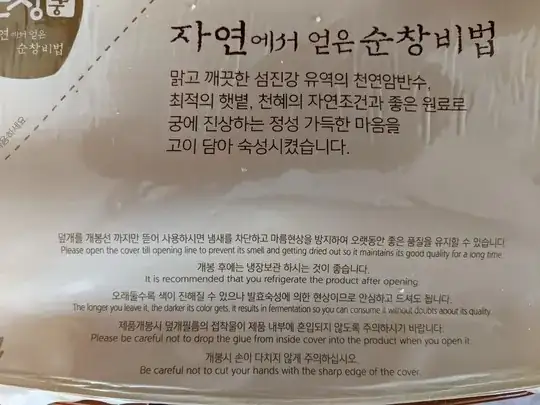
Picture by me.

I spread it on toast or crackers, thinly, often with other things. I add it to cooked rice. I've put it in peanut sauce. I do not "dilute it with water" unless trying to make miso soup (to which it should, AIUI be added after heating and before serving, not before heating.)

Thus far, I don't concern myself overly much with "proper" usage, other than the "don't cook it" aspect. I'm constantly trying to find lower salt versions, as I find it overly salty in general. That, of course, informs an approach to using it, which is to use it to supply the salt (and additional flavor) in anything you'd otherwise add salt to that seems like it would play well with the added flavor.

As far as I understand, Miso is also fermented - the lighter colored stuff is less aged, the darker colored is more aged, but it's not "unfermented" in either case. Your brand's info here. They even have recipes.

I have to wonder if you are using it so sparingly and diluting it so much that it's not able to contribute much flavor...

Ecnerwal
  • 21,264
  • 35
  • 79
3

I can’t comment on the Korean pastes (which I use, but I don’t know enough about the cuisine to know if there’s a ‘correct’ way to use it.

For Japanese miso, traditionally you don’t want to boil it. You add it at the last minute, after whatever vegetables have been cooked. If using it in soup, you place some miso in a ladle or large spoon (held in your non dominant hand), dip it in the soup to get a little broth, then stir with chopsticks to thin it out and eliminate lumps, then stir the thinned miso into the soup.

You can also use a small strainer instead of a ladle, dip it into the broth, and then a spoon to stir the miso in to thin it.

Miso can also be mixed with Mayo or similar, sometimes with honey, garlic, hot peppers, or other flavorings to make a dip for vegetables

Joe
  • 82,913
  • 19
  • 164
  • 476