12

Unobtanium is described as a "highly valued mineral" found on Pandora. But according to the Wikipedia, "A mineral is a naturally occurring substance that is solid and representable by a chemical formula".

This description includes materials like Diamond which only contain one type of element (Carbon [C]), and materials like Quartz which are compounds (Silicon Dioxide [SiO2]).

I am not asking for any scientific proof, because that would be off topic here. But I would like to know if there is canonical information on the type of Unobtanium. Is Unobtanium an element or a compound?

sampathsris
  • 1,271
  • 2
  • 12
  • 27

1 Answers1

20

In the book Avatar: An Activist Survival Guide by Maria Wilhelm and Dirk Mathison, many topics about both the planet Pandora and the Na'vi culture are explained at more detail.

In the section Astronomy and Geology, Unobtanium is described as a compound.

Page 16:

When the world's first high-temperature superconductor was created in the late twentieth century, it proved to be useless because of inherent instabilities. Further efforts proved futile, and researchers finally termed their goal “unobtainium” (the spelling was later changed to “unobtanium” to conform to chemical element naming, although unobtanium is a compound, not an element). There matters stood until the first unmanned exploration vehicle reached Alpha Centauri A and discovered deposits of a high-temperature superconducting substance on an Earth-like moon named Pandora—unobtanium had been obtained at last.

However, as noted by Richard, the same book in page 18 shows a picture of Unobtanium with a periodic table element shown as #120.
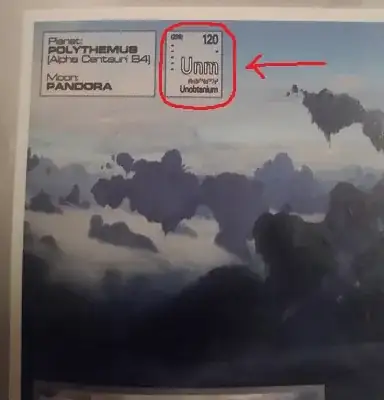
Page 18 illustration showing a periodic table entry for Unm, atomic number 120

So, given that the book is not consistent with itself, the answer is not clear. However, I think the first information has more prevalence, since it's meant to be read and understood, while the next picture is just for illustration purposes and not part of the main text.

FuzzyBoots
  • 223,803
  • 23
  • 680
  • 1,039
Arturo Torres Sánchez
  • 2,059
  • 2
  • 19
  • 23
  • It's described as "Element #120" on page 18 of the same book. – Valorum Sep 26 '14 at 14:13
  • I can't find this info on my copy (a preview from the Web, but page 18 is present) – Arturo Torres Sánchez Sep 26 '14 at 14:16
  • OK, I see it, it's in the main picture... So, if it's contradicting itself, what is the answer? – Arturo Torres Sánchez Sep 26 '14 at 14:18
  • That's a very good question. You need to dig deeper if there's a canon contradiction. Are there any quotes from Cameron or any of the film's cast or crew, for example? – Valorum Sep 26 '14 at 14:31
  • In the light of new info, I have to unaccept the answer. Sorry @ArturoTorresSánchez. – sampathsris Sep 26 '14 at 14:32
  • Ch. 15 of the officially-licensed "The Science of Avatar" also mentions that part of the backstory is that the Alpha Centauri system was "perturbed by an intruder, a runaway neutron star" early in its history, and that "the neutron star, itself a source of powerful magnetic fields, ripped into the young Centauri stars, and some bizarre nuclear reactions followed. The result was a system laced with unobtanium." So "nuclear reactions" suggests new elements involved, although it could still be a compound that just included a higher element than the ones we know. – Hypnosifl Sep 26 '14 at 14:55
  • The illustration also misspells the name of the cyclops giant who provided the name for the giant planet Pandora orbits -- which was "Polyphemus". – Zeiss Ikon May 31 '19 at 12:03