21

In The Fellowship of the Ring, after Arwen outruns the Nazgûl, she notices that Frodo is in a very bad state and seems to be very near death.

At this point she says;

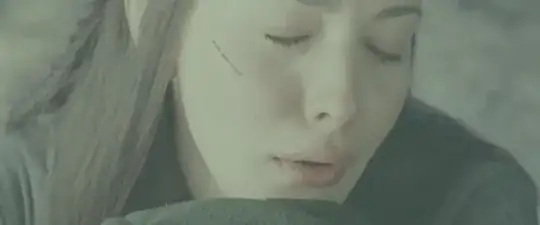
Close-up of Arwen's face, a scratch on her right cheek, eyes closed

What Grace is given me, let it pass to him

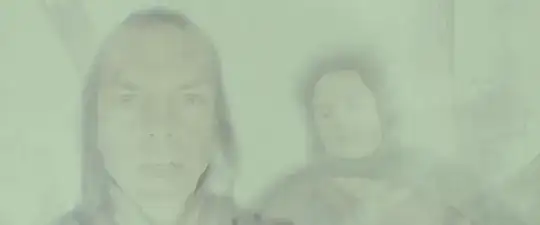
Which was followed by trippy-smithy and I usually didn't pay attention to it.

trippy-smithy: faded-out composite of Elrond's face, trees and Frodo against a foggy white background

What did she mean by that?

Was it just a prayer? Or was she giving him some of her own life force to save him?

Update

@John_Rennie pointed out that this scene is not there in the books. Considering this, the answer doesn't have to be perfect. It can be taken from examples of other such events from the Tolkien-verse or something from the real-world, where this scene was given an explanation.

DavidW
  • 128,443
  • 29
  • 545
  • 685
Suman Roy
  • 3,423
  • 6
  • 23
  • 39
  • 7
    The scene isn't in the book, so I don't think there is an reliable answer. – John Rennie Aug 13 '14 at 08:17
  • Well, her grace is being Elrond's daughter, which makes it her choice which kind she wants to be, which makes no sense whatsoever here, since she does not decide until later. Even in the book though, she grants a gift that is given to her to Frodo (after all is done): her place on the ship to the Undying Lands. Since she is still supposed to actually take that place in the second movie, not really an answer either. Like @JohnRennie said, reliable answers will be hard to come by. – BMWurm Aug 13 '14 at 08:49
  • @JohnRennie Not from Tolkin, no. But from Peter Jackson. It is known he wanted to give Arwen a more active role. And maybe somewhere in the dozens of hours of "making of" he says what it's supposed to mean. – Einer Aug 13 '14 at 08:53
  • 11
    Yes PJ wanted Arwen more involved, because he wanted to build the love story, which in a visual medium you cannot really do if the lovers barely meet. Sadly, the entire scene makes no logical sense anymore, since upon her arrival, Frodo sees her surrounded by white light, being halfway in the spirit world because of the Morgul blade. Yet she never was in Valinor - unlike Glorfindel, who SHOULD have been the one to find them. They followed the description in the book - probably because it IS a great visual - but changed the character, which kills the logic. "Artistic Licence" as the answer? – BMWurm Aug 13 '14 at 08:59
  • 2
    @BMWurm Glorfindel in LotR may not have been in Valinor. Confusingly, Tolkein had two distinct elven characters named Glorfindel. One is the one who healed Frodo, and the other was killed by a balrog during the fall of Gondolin. In one of his letters Tolkein considered that the later character may have been a "re-embodiment" of the older, but this was in the sort of notes that Tolkein often wrote and later retconned. Canonicity is uncertain – Jason Baker Aug 13 '14 at 09:25
  • @Jason True, but I always understood the "glowing when observed while in the spirit world" thing as having been in the undying lands and therefore existing in both worlds at the same time (and I thought I had read that somewhere years ago). Elrond is tricky, because on the one hand not having been in Valinor but on the other being a ring-bearer, yet is not described as glowing as far as I can recall. But you're right, it is a tricky subject. – BMWurm Aug 13 '14 at 09:31
  • 3
    The words take on an entirely different meaning when you realize she's pressing him up against her chest... – Omegacron Aug 13 '14 at 17:12
  • 3
    Gandalf and Frodo have this exchange in Rivendell, which at least very, very strongly implies Glorfindel was in Valinor: G: "those who have dwelt in the Blessed Realm live at once in both worlds, and against both the Seen and the Unseen they have great power." F: "I thought that I saw a white figure that shone and did not grow dim like the others. Was that Glorfindel then?" G: "Yes, you saw him for a moment as he is upon the other side". – Crowman Aug 14 '14 at 02:38
  • 2
    The line is actually: "What grace is given me, let it pass to him." As in, "trade my life (powers, luck, blessings, whatever) for his." – Stan Rogers Aug 14 '14 at 06:52
  • @PaulGriffiths Thanks for the quote, that is what I based my assumptions on. – BMWurm Aug 15 '14 at 14:49
  • @BMWurm - The undying lands weren't 'another world' when those elves left it. But regardless, I would just say that this power of the Noldori is communicated by blood to their kin. After all, Luthien kicked all kinds of butt, but had never been to the Undying Lands, nor had any of her elf ancestors. – Oldcat Dec 12 '14 at 01:27
  • @JohnRennie - Any relation to the actor Michael Rennie? – Wad Cheber Aug 01 '15 at 20:18
  • 1
    @WadCheber: none at all, though the actor Charles Laughton was the cousin of my great-aunt Marjorie Laughton. It's not a great claim to fame, but there you go :-) The name Rennie is quite a common Scots-Irish name. – John Rennie Aug 02 '15 at 05:14

7 Answers7

41

This scene isn't in the books but it's an obvious reference to (or at least inspired by) a different scene that does exist in the books, at the beginning of the Return of the King chapter, Many Partings:

A gift I will give you. For I am the daughter of Elrond. I shall not go with him now when he departs to the Havens; for mine is the choice of Lúthien, and as she so have I chosen, both the sweet and the bitter. But in my stead you shall go, Ring-bearer, when the time comes, and if you then desire it. If your hurts grieve you still and the memory of your burden is heavy, then you may pass into the West, until all your wounds and weariness are healed.

This is during a conversation between Frodo and Aragorn and Arwen, after Aragorn's coronation and wedding, and Arwen is granting Frodo the gift of sailing West for healing: "what grace is given me"...

  • And this connects well with OceanMachine's answer. – trlkly Aug 14 '14 at 05:53
  • 2
    Yet, as Matthew Graybosch points out in his answer: Bilbo was allowed to go too, and did NOT recieve that gift from Arwen - in fact they never meet again. Or do 2 Halflings add up to one She-Elf?? And what about Sam later on?? EDIT: Asked and answered: http://scifi.stackexchange.com/questions/48375/why-do-bilbo-and-frodo-gain-access-to-valinor – BMWurm Aug 15 '14 at 14:54
31

As commenters have noted, Arwen was not originally intended to encounter Frodo in this scene. Peter Jackson substituted her for Glorfindel, probably for a few reasons (the romantic subplot makes sense, as does removing an appearance of an otherwise redundant character).

However, in the context of the movie, it would seem that Arwen is praying for the Valar to intercede. The Annotated Score, of all things, has this to say about the scene:

Arwen encounters Aragorn and the hobbits in the forest. In introducing Arwen's theme, Shore stresses the dulcet tones of female voices - the characteristic choral sound of the elves. Arwen picks up Frodo and, with Ringwraiths in pursuit, makes for Rivendell with all her might. She defeats the Black Riders at the Ford of Bruinen, but the ride has taken its toll on Frodo. Arwen offers him a blessing and the score returns to its Elvish vein, repeating Arwen's theme then echoing her words in female chorus.

The Music of the Lord of the Rings Films Part 1: The Fellowship of the Ring The Annotated Score Disc Two 3: "Give Up the Halfling"

The second part of the Score, the choral lyrics, calls this "Arwen's Prayer", and the lyrics are an expanded version of the line quoted in the question:

What Grace is given me, let it pass to him. Let him be spared. Mighty Valar, save him.

The Music of the Lord of the Rings Films Part 1: The Fellowship of the Ring The Annotated Score Texts "Arwen's Prayer"

So it seems like nothing more than Arwen asking the Valar to sustain him.

Jason Baker
  • 163,357
  • 44
  • 898
  • 794
3

As has been said several times before, this scene doesn't occur in the books1, so what we see in the film is all we have to work with. This means that, unless Peter Jackson decides to weigh in, we have to rely on speculation. This being the case, here's my two cents:

I've always taken Arwen's statement at face value: She's an elf, and from a family who are powerful, even for the already-powerful Elven race. She's not saying "I give up my immortality for Frodo" or anything like that; she's just saying that she wants Frodo to be taken under the same special consideration that Elves enjoy. She is asking for her Elven-ness to protect Frodo the same way it protects her.

You could rephrase it as something like this:

"Whatever makes Elves like myself super-special, and lets us live forever and heal faster than mortals - I want Frodo to have that too, at least until I get him to Rivendell where my dad can fix him up. Make Frodo an honorary, temporary elf so he doesn't die before we can heal his wounds and stuff".

This is obviously a very simplified version of what she is asking for, but I think it captures the essence of the request pretty well. She isn't giving Frodo anything of her own, and she isn't trading herself (or her life) for him (or his life). She's just asking for him to live long enough to receive medical attention.


1 In fact, Arwen doesn't really do much of anything in the books: she sews a flag for Aragorn, then marries him, says some nice stuff to Frodo and the rest of the Fellowship, eventually makes Sam's daughter a Maid of honor at her court, offers Frodo her spot on the ship to the Undying Lands, and finally, she dies. That's about it. She isn't particularly important as anything other than Aragorn's girlfriend/fiancée/wife.
Wad Cheber
  • 69,816
  • 70
  • 523
  • 684
  • Hmmm. I haven't seen the movie, but in the book, she does give something to Frodo — her seat on the ship to the West. Granted, it was something she didn't intend to use anyway, since she chose to stay with Aragorn. The movie scene may be transposing this. –  Aug 01 '15 at 23:15
  • @Gilles - Good catch, but didn't he already have a spot? I thought she just said "If they won't let you on the boat, tell them I sent you". – Wad Cheber Aug 01 '15 at 23:17
  • http://scifi.stackexchange.com/questions/27986/where-did-j-r-r-tolkien-state-that-arwen-suggested-that-frodo-be-allowed-to-sai –  Aug 01 '15 at 23:19
  • @Gilles - Fair enough. This begs the question of who let Bilbo and Sam go to the Undying Lands. I assume that Legolas made the arrangements for Gimli. – Wad Cheber Aug 01 '15 at 23:22
  • 1
    Regarding Bilbo and Gimli. Not sure about Sam; it's possible that Frodo interceded while in Aman, but I'm aware of a canon answer at the moment – Jason Baker Aug 05 '15 at 02:12
2

I think this might be Tolkien's devout Catholocism mixing in with the narrative. The power of "personal" grace is part of that belief system. In this case, not originating from the power of a Christian deity- but from the Valar. I realize he didn't write the dialogue:but I believe his spirit would approve;and the writers got this right If you read his beautiful descriptions concerning Varda (or Elbereth), in both the Trilogy & the Silmarillion, there's imagery that's very close to parts of Marian prayers (see Little Office of the Immaculate Conception - a very old prayer). I'm not an Elvish linguist... but just something to perhaps consider behind tbe dialogue?

Indyelf
  • 21
  • 1
  • Forgot to mention, in the previous context: grace may be passed - from one deity (like Mary or the Holy Spirit) to a person... or from one person (like Arwen) to another. – Indyelf Mar 09 '16 at 23:26
  • Not bad speculation. We would prefer any sources you have, but this is a hard question for sources. Good first post! – CHEESE Mar 09 '16 at 23:28
2

As others have pointed out, Jackson and his writing team took liberties with Tolkien's source material. However, it may help to dig into the Silmarillion. Here are a few salient points to keep in mind:

  • Elves are not monolithic. Some tribes left Middle-Earth early in the First Age to dwell with the Valar in Valinor.
  • One of these tribes, the Noldor, returned to Middle-Earth after declaring war on Morgoth, the first Dark Lord and Sauron's boss.
  • After Morgoth's final destruction, the Noldor were permitted to return to Valinor.
  • Arwen, being of Noldor ancestry through her half-Elven father Elrond, is also permitted to sail from the Grey Havens to Valinor.

This ability to sail to Valinor is probably the "grace" Arwen has asked to be passed to Frodo, but this doesn't make any sense in the wider story. Bilbo and Frodo are both allowed to sail with Gandalf, Celeborn, Galadriel, and the others who departed Middle-Earth at the end of The Lord of the Rings not because of Arwen's sacrifice, but because of the suffering they faced as Ringbearers.

My opinion was that the entire scene was a mistake caused by Jackson replacing Glorfindel with Arwen so that she wasn't just a trophy bride for Aragorn. In the book, Arwen chose to live as a human and not an elf, renouncing her immortality.

1

It's really simple.

Arwen is/was immortal and as such has the right to pass "into the West". By marrying Aragorn, she chooses to mirror Lúthien (Tinúviel) in her relationship with Beren and opts for mortality because she loves Beren.

Arwen gives her immortality and right to go into the West for eternity to Frodo.

DavidW
  • 128,443
  • 29
  • 545
  • 685
CeeJay777
  • 11
  • 1
  • 2
    Right then and there? Arwen still hadn't married Aragorn and was later in the film seen heading west to the havens with the other Elves. This seems incorrect to me. – Edlothiad May 18 '18 at 08:04
  • She doesn't need to be married to him to give top the right. She was seen heading West but she turned back and went back to Aragorn when she discovered her father had withheld all the truth to her. – CeeJay777 May 18 '18 at 08:45
  • That reflects her relationship with Aragorn. It doesn't say much for her connection with Aragorn if she gives up her immortality for someone else (even if he is the ringbearer). She would've made her decision to give up her immortality for Aragorn regardless of whether or not Frodo survived the destruction of the ring. – Nicola Talbot May 18 '18 at 11:56
1

It has been some time since I saw the films or read the books, but I always thought she was giving up her elvish immortality to save him. Later on in the films, she says things like "I choose a mortal life" and to Aragorn "I would rather live one lifetime with you, than spend a thousand alone" (I know I probably butchered that, sorry).

The passage in Darth Satan's answer seems to convey this also.

  • Do you have anything more concrete (evidence or proof-wise) to back up this answer beyond "I always thought?" I suggest checking out the Tour to get a better idea of how to ask and answer questions here. – Meat Trademark Aug 13 '14 at 17:32
  • 1
    @MeatTrademark OceanMachine did cite a later point where Arwen states that she "chooses a mortal life". If you lay out her dialog end-to-end... – Yakk Aug 14 '14 at 01:17