92

I always wondered which are the two towers that are referred to in The Lord of the Rings: The Two Towers. My memory is a bit hazy right now but there are at least 5 Towers that are mentioned in the book they are:

  1. Cirith Ungol
  2. Orthanc (Saruman's capital)
  3. Minas Tirith (Gondor's capital)
  4. Minas Morgul
  5. Barad-Dûr (Sauron's capital)

My guess is the Towers mentioned are 1 & 2 which were once part of Gondor but now Minas Morgul is part of Mordor. Is there any actual reference in the book citing the name of the towers?

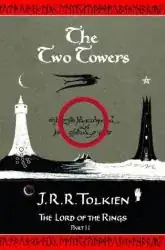
The cover of "The Two Towers", showing one white tower with the moon above on a dark ground, and one black tower with a star above on a white ground. A dark winged creature is flying in between them, and a red ring is positioned in the center.

Mithical
  • 38,898
  • 17
  • 178
  • 229
Ram G Athreya
  • 2,235
  • 3
  • 16
  • 16
  • 15
    I believe it refers to an alliance of Barad Dur (Mordor) and Orthanc – Liath Jun 23 '14 at 15:26
  • 1
    Any proof of this in the books are some supporting material? – Ram G Athreya Jun 23 '14 at 15:27
  • 5
    The whole relationship between Saruman and Sauron as well as the linking Palantir within both towers are parts of a pretty strong support argument. – CandiedMango Jun 23 '14 at 15:30
  • @RamGAthreya - no, that's why I only commented. Don't have any proof/references to hand – Liath Jun 23 '14 at 15:37
  • 1
    There's nothing in the book that says in effect "These are the two towers". I'm not sure which two Tolkien had in mind. – Matt Gutting Jun 23 '14 at 15:42
  • 1
    For what it's worth, wikipedia has something to say about this. It seems he settled on Orthanc and Minas Morgul. (Haven't followed up on their references.) – BoBTFish Jun 23 '14 at 15:45
  • This is very interesting & exactly what I was looking for. Didn't know there was considerable confusion for Tolkien himself when naming the books – Ram G Athreya Jun 23 '14 at 15:52
  • 4
    I clicked your question thinking the answer was obvious: "Saruman and Sauron's towers, duh." Aaand I was wrong. So +1. – Dacio Jun 24 '14 at 00:28
  • Never once did it occur to me that my own answer to this question was entirely based on the movie's focus on Mordor and Orthanc. Haven't read the books since I was in grade-school. Guess it's time to revisit them. – Sandy Gifford Apr 10 '15 at 20:44
  • The Asinelli and the Garisenda ;) https://en.wikipedia.org/wiki/Two_Towers,_Bologna – Sekhemty Aug 08 '18 at 14:15
  • You could also throw in Carchost and Narchost (the "Teeth" flanking either side of the black gate)--this is the only reference in "The Two Towers" to "two towers" (see "Book IV Chapter 3 The Black Gate is Closed"), representing a literal, insurmountable challenge that delays Frodo's quest (while the characters are similarly diverted from their primary quests in TTT). They were also corrupted structures built by Gondor (with corrupted characters Theoden, Gollum, and Saruman driving the plot). Probably a stretch, but I latched onto it in grade school because it literally refers to "two towers". – Tahlor Sep 24 '18 at 19:09

8 Answers8

101

Tolkien Gateway says:

Tolkien came up with the title under deadline pressure and later expressed dissatisfaction with it. In letters and one sketch he considered several possible sets of towers, including Minas Tirith and the Barad-dûr, and even the possibility of leaving the matter ambiguous. However, he eventually settled on Orthanc and Minas Morgul and wrote a note to this effect which appears at the end of most editions of The Fellowship of the Ring. He also produced a final cover illustration showing these towers, but the publisher decided not to use it in order to save money on the production costs.

Loosely, any pair from a set of five towers in the story could plausibly fit the title: Cirith Ungol, Orthanc, Minas Tirith, Barad-dur, and Minas Morgul.

Here's the quote from "Fellowship of the Ring" that the Gateway referred to:

Here ends the first part of the history of the War of the Ring.
The second part is called The Two Towers, since the events recounted in it are dominated by Orthanc, the citadel of Saruman, and the fortress of Minas Morgul that guards the secret entrance to Mordor; it tells of the deeds and perils of all the members of the now sundered fellowship, until the coming of the Great Darkness

And the letters that the Gateway referenced - research shamelessly stolen from this forum - are:

A letter to Rayner Unwin (the publisher) from Aug 17, 1953 (Letters #140)
"The Two Towers" gets as near as possible to finding a title to cover the widely divergent Books 3 and 4; and can be left ambiguous - it might refer to Isengard and Barad-dûr, or to Minas Tirith and B; or Isengard and Cirith Ungol."

With the note which explains:

In a subsequent letter to Rayner Unwin, Tolkien is more definite that the Two Towers are 'Orthanc and the Tower of Cirith Ungol'. On the other hand, in his original design for the jacket of 'The Two Towers' the Towers are certainly Orthanc and Minas Morgul. Orthanc is shown as a black tower, three-homed (as seen in Pictures no. 27), and with the sign of the White Hand beside it; Minas Morgul is a white tower, with a thin waning moon above it, in reference to its original name. Minas Ithil, the Tower of the Rising Moon ('The Fellowship of the Ring' p. 257). Between the two towers a Nazgûl flies.

In the "subsequent letter" from Jan 22, 1954 (Letters #143) mentioned in the footnote , Tolkien wrote:

"I am not at all happy about the title 'The Two Towers'. It must if there is any real reference in it to Vol II refer to Orthanc and the Tower of Cirith Ungol. But since there is so much made of the basic opposition of the Dark Tower and Minas Tirith, that seems very misleading."
Mithical
  • 38,898
  • 17
  • 178
  • 229
DVK-on-Ahch-To
  • 342,451
  • 162
  • 1,520
  • 2,066
  • 7
    Letter 140: "The Two Towers gets as near as possible to finding a title to cover the widely divergent Books 3 and 4; and can be left ambiguous – it might refer to Isengard and Barad-dûr, or to Minas Tirith and B; or Isengard and Cirith Ungol". –  Jun 23 '14 at 16:08
  • 2
    @JimmyShelter - beat your coment (I think) with my edit :) – DVK-on-Ahch-To Jun 23 '14 at 16:11
  • I think @DVK's answer is satisfactory don't you @JimmyShelter? – Ram G Athreya Jun 23 '14 at 16:28
  • @RamGAthreya - he started writing the comment before I had the quotes from the letters edited in. – DVK-on-Ahch-To Jun 23 '14 at 16:31
  • 1
    @RamGAthreya - and the comment was intended to support DVK's answer (I also gave it a +1), not to make any kind of claim that it was unsatisfactory or otherwise inadequate. –  Jun 23 '14 at 16:45
  • I am quite satisfied with DVK's answer, good job & ty. So I guess I will go ahead and accept it. – Ram G Athreya Jun 23 '14 at 16:58
  • This is where the movies really color my impression of the story. Because of the stark difference in prevalence between Minas Morgul and Barad Dur in the movies, I always took for granted that the title referred to the Eye of Sauron tower and Orthanc - it was never even a question. – coburne Jun 23 '14 at 17:29
  • 1
    I've always assumed it was Barad-dûr and Minas Tirith - The capitol of darkness vs. the capitol of light. But I'm not going to argue with DVK's research. – Joe L. Jun 24 '14 at 01:58
  • This answer is indeed definitive and has my upvote. However, I must say when I first read The Two Towers (waaay before the Peter Jackson movies were even planned), there was no doubt in my mind the title referred to the two mighty towers standing in direct opposition: Minas Tirith and Barad-dur! I never even considered any other possibility. – Andres F. Dec 29 '14 at 18:44
  • Wow. I am surprised by how many different opinions people had formed. I always took it as self-evident that the towers in question were Barad-dur and Orthanc. – Wad Cheber May 18 '15 at 00:08
  • The answer is good but I don't think it is definitive and none can be, even Tolkien wasn't sure of it, but from the aforementioned letters it seems Tolkien preferred to think of the two towers as Orthanc in Isengard and Cirith Ungol, it makes sense as Cirith Ungol is more relevant in that book, it was there where the orcs had Frodo as prisoner and where Sam found him, it is also their entrance to Mordor, however Minas Morgul sounds more poetic as it represents the old splendor of Gondor and the Numenoreans heritage. When I read the book I always thought of Barad-dur and Orthanc though. – raspacorp Jan 29 '20 at 14:11
  • You should only be bolding Orthanc and Cirith Ungol. The other bold text doesn't require the emphasis, and might make it hard to get your point. – Spencer Mar 24 '23 at 22:19
34

As DVK's excellent answer describes, there is a great deal of confusion on this question as far as the books are concerned.

I would add to that answer only: when Peter Jackson made the movies he wisely decided to state clearly that the "two towers" of the title were the towers of the main antagonists: Orthanc and Barad-dur. Saruman in the movie has a voiceover monologue where he declares that the world of men cannot withstand an alliance of the two towers, meaning his and Sauron's towers.

Eric Lippert
  • 814
  • 8
  • 9
  • 13
    I'm tempted to -1 for using the words "Peter Jackson" and "wisely" on the same site, never mind in the same sentence :) – DVK-on-Ahch-To Jun 23 '14 at 16:32
  • 31
    @DVK: There are many choices I would have made differently than PJ, but for most of the choices I disagree with, I at least understand the motivation. This one though I think is good; obviously there is potential confusion on the question; even the author was confused! It has never struck me as sensible that one of the "two towers" be Minas Morgul. Tolkien -- or PJ, for that matter -- could have deleted Minas Morgul from Middle Earth entirely with only trivial changes to the plot. – Eric Lippert Jun 23 '14 at 16:48
  • 6
    I'll never forgive the Dwarf Tossing. Also, welcome to SFF.SE corner of the Exchange :) – DVK-on-Ahch-To Jun 23 '14 at 16:49
  • 3
    @DVK: That's a good example of a choice that I would not have made but I understand the motivation. A moviemaker has a desire to lighten the tone and provide a little comic relief in an intense scene and the call-back to TFOTR in a similarly potentially intense scene in TTT is a nice touch. If you're going to provide comic relief, it's not bad. The choice that ought to be questioned is: is comic relief necessary or fitting in TLOTR the first place? I would have preferred it a little more on the grim side. – Eric Lippert Jun 23 '14 at 16:56
  • 6
    The current buzzword is IIRC "gritty". And yes, the comic relief was way out of place. Total dissonance, like a cold blooded murder inserted into the middle of a nice child friendly Disney cartoon. – DVK-on-Ahch-To Jun 23 '14 at 16:58
  • 4
    So Tolkien should be castigated for his 'body count' joke in the Two Towers? Or the Hobbits in Isengard? – Oldcat Jun 23 '14 at 17:38
  • 4
    I don't mind the attempts at comic relief. But I mind that virtually all of those attempts are made with Gimli as the laughingstock. Dwarf tossing, losing to a completely unaffected Legolas in a drinking contest, and most of all, the chase across Rohan. Dwarfs preferring the dash, being unsuited for long distances? I mean, really? ;-) – DevSolar Jun 25 '14 at 07:10
  • 7
    @DVK Because no nice, child friendly Disney cartoons have cold blooded murder in them cough Lion King cough :) – AndyD273 Jun 25 '14 at 12:46
  • 7
    @AndyD273 - That works, though I was actually trying to refer to Bambi. But I'm glad someone finally caught on to the sarcasm – DVK-on-Ahch-To Jun 25 '14 at 14:21
4

Except that when Faramir has Frodo and Sam captured, Sam is scolding Faramir. He asks Faramir if he wants to have 'two towers smiling at each other across the river' referring to Minas Tirith and Minas Morgul.

3

I recommend thinking outside of the box here.

  • Literally, Orthanc and Cirith Ungol, obviously -
  • but philosophically and perhaps even socially, "Sam & Frodo".

They're the obvious heroes whose strength of character - not masonry or arms - carry the story to its conclusion.

Möoz
  • 45,398
  • 37
  • 256
  • 451
Andrew
  • 79
  • 1
  • 11
    Interesting point, some references - even more explanations - would add some weight to your assertions. – Möoz Jun 24 '14 at 01:04
  • 2
    This sort of double meaning would be fitting for Tolkien's genius. The small and overlooked are the victorious champions over the initially more powerful and dominant towers (obviously Orthanc and Barad Dur). I could see C.S. Lewis and Tolkien pleased with this as they sat at the brew pub. – wcochran Jun 25 '14 at 02:35
  • 1
    Not bad, but I have some serious objections. First, it's not obvious what the literal meaning was, as Tolkien himself stated (see accepted answer). As for the philosophical side, it's too subjective and opinion-based. I can think of many metaphorical "towers" standing either in opposition or side-by-side: Sam & Frodo, yes, but also Good & Evil, The Fellowship & Mordor, Sauron & Saruman, Barad-Dur & Minas Tirith, Gondor & Mordor, Sam & Gollum, etc, etc. This is way too speculative... – Andres F. Sep 05 '15 at 23:35
  • 1
    @AndresF. The beauty of literature is that you can draw that fractal of meaning from 3 words. – Josh Rumbut Dec 07 '15 at 08:52
  • 2
    @JoshRumbut Doubtless. But while it's fun to speculate about this in discussions with friends, sadly it's unsuitable for this site. Even though, like you say, this is inherent -- and even needed -- in literature, this isn't truly a site about literary analysis. It's more a site that invites answers of the form "what author X meant was Z, as they explain in this interview (link) or in page 456 of the book". (Note: this is a limitation of the Q&A format of this site, but while we're here we must accept the rules) – Andres F. Dec 07 '15 at 16:56
1

From a literary point of view, especially the idea of "parallelism", logic leads one to Orthanc and The Tower of Cirith Ungol. At the end of Book III, Saruman is stranded in Orthanc; at the end of Book IV, Frodo is stranded in The Tower of Cirith Ungol. Admittedly, this argument has raged on since 1954, and each point of view has a couple of merits. The OCD part of me likes this one.

Nax
  • 11
  • 1
1

There's no real argument for it being what the title is referring to, but it's interesting to note that the phrase "two towers" is used to describe the black gate in The Return of the King when Aragorn rides up to it with the host of Gondor.

-1

Saruman makes clear the Two Towers are the Orthanc (Isengard) and Barad-Dûr (the seat of the Lord of Mordor) when he talks to Sauron through the Palantír about "the alliance of the Two Towers".

Ikem Noren
  • 235
  • 2
  • 6
-2

Cirith Gorgor, the Black Gate, guarded by the two Towers of the Teeth, Carchost and Narchost. See chapter the chapter entitled, "The Black Gate is Closed." As far as I'm can recall, it's the only time the phrase "Two towers" is used in the whole book and I'd argue that's likely what is being referenced.