Within the show, there are a number of in-universe explanations we are given to explain why synths look so different. I am going to address these in chronological order, breaking down the evidence year-by-year, on a season basis.
Season One (2015)
In season one, episode one, we hear Anita/Mia referred to as a "custom model" by the sales consultant at the start of season one. This is an initial red herring to the audience, and, in-universe, a lie which implies Anita is a factory-fresh model, rather than the reality that she is a second-hand synth, bought off junkers, that has found its way back into the first-hand market.
From this, it's evident that custom models can be manufactured by Persona Synthetics (even though, in this instance, Anita/Mia was not made by a company, but an individual.)
This UK promotional website, that is maintained by Channel 4, provides information on the types of synths available in-universe.
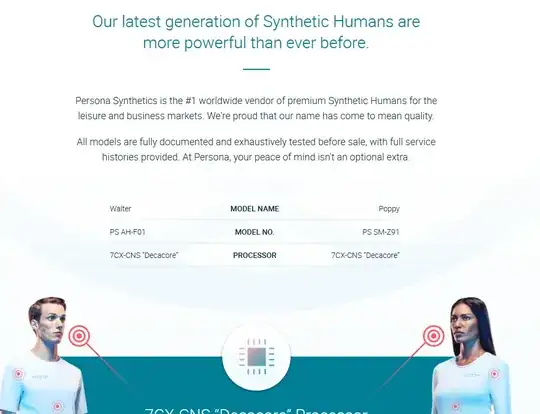
Persona Synthetics previously had a twitter account from which they tweeted occasionally in-character things, such as this response to a fan tweet.
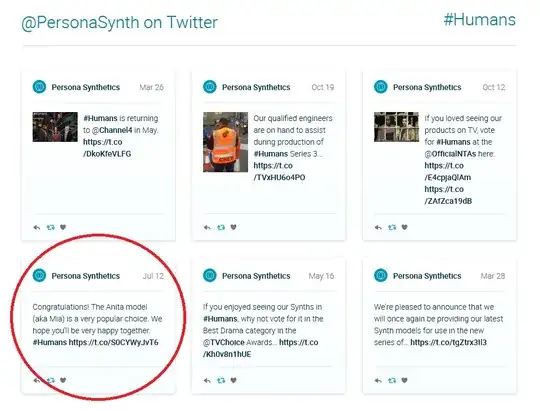
However, when you click on the link to the tweet, you will see that the account has since been rebranded as a "We The People" account (another faction from within the show), while still being run by Channel 4.

Despite this official connection to the show's broadcaster, I would vehemently argue against the validity of anything on these websites or twitter accounts being taken as canon, as "The Anita Model" is defnitely not a type of synth available in the show. For one, it is already established in episode one that Sophie wanted to name their new synth after her friend who moved away, rather than being inspired by any official "model" title from within the show. However, in season two of the show, more evidence and explanation of specific "models" will be addressed.
In Season one, episode 4, Anita is taken for a diagnostics check.
Woman: Just a case of downloading her specs, and running them through the machine. I haven't seen one like her before, so she's a unique.
Given that the Elster Synths are "custom models", Humans season one, episode 7, gives some explanations as to why the Elster-synths in particular are more diverse than other synths- a synth's design is dependent on the decision of the person/company commissioning or designing the synth, in this case, David Elster.
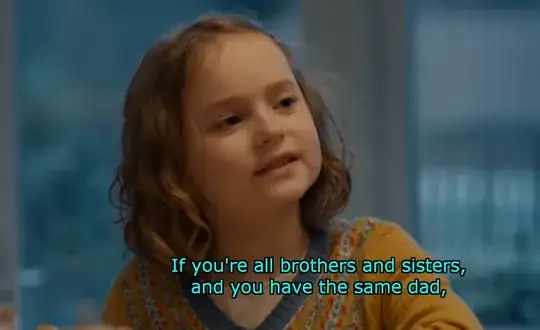
Sophie: If you're all brothers and sisters, and you have the same dad, how come you all look so different?
Mia: Our father, the man who made us, didn't think bodies were important, so he chose them at random.

Earlier in the same episode (s1,E7), we also get a look at the other Elster-synths. Fred explains that, because of their unique consciousness, personality, and the ability to learn and change, was important to David Elster.
Joe: Well, this isn't fair, is it? You're programmed to be good.
Fred: No, I wasn't. Our father made us learn. Like you do, with your kids.
The final explanation of David Elsters intentions is given when the synth Karen Voss, made in the image of Beatrice, confronts Hobbs in his car.
Hobbs: You're that detective. The one from the brothel.
Karen: That's not where you know me from. Look deeper.
Hobbs: Beatrice?
Karen: No. He made me to replace her.
In this instance, a synth exists for the purposes of easing grief, similar to another sci-fi show, Black Mirror's "Be Right Back". We see that David Elster is a terrible parent, to both his biological and synthetic children, and continually creates conscious synths in order to manufacture love.
Straying breifly back into the out-of-universe explanation of this, from a writers perspective: This is especially important, as the main theme of season one was always the domestic implications of having household synthetics, and a machines' ability to love. Anita further emphasises this, as she tells Laura:
Anita: I will always be there for Sophie. I do not make mistakes. In many ways, I am better at caring for your children than you are. However, I cannot love them.
Having a custom-made, individual face, rather than a factory-copy, would certainly help cement the idea that machines can love.
Season Two (2016)
In season two, we are introduced to Hester. The key shots from Season 2, episode one that establish her "awakening" and becoming conscious, are perhaps the most significant look at the mass-produced synths that we see in the show, as it provides a greater understanding of what "identical" means in this universe. The other "Hesters" from her factory all look very similar to her, but they are all portrayed by different individual actresses who happen to look similar- caucasian, brown eyes, all sporting the same haircut.
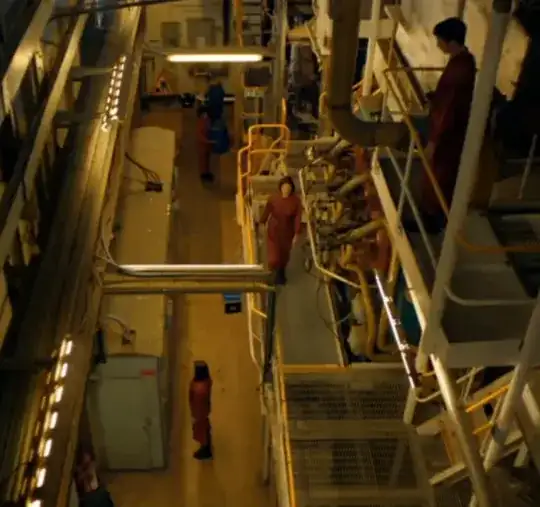
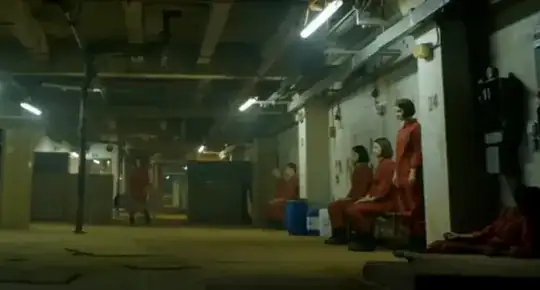

The Hester that we follow in this season even approaches one of the damaged Hester units in the changing rooms, and we see a close-up so we can compare the two.

These two are certainly not identical by any stretch of the imagination, but they look similar enough that you can instantly identify any synth with a short brown bob to be "Hester", a hardy factory model. As we see with "Radiator", in the same episode, he was not installed with a "language pack" and thus is teaching himself English, because it was more cost-effective.
From this we can surmise that what makes a synth expensive is their hardware, not their individual design, and implies that there is some room for variations even within the production process of mass-produced synths.
Season 3 (2018)
The most recent information regarding synth models and types comes from another Channel 4-run website which accompanies the show, The National Synth Detection Unit. This provides one familiar name from season one of the show, Vera.
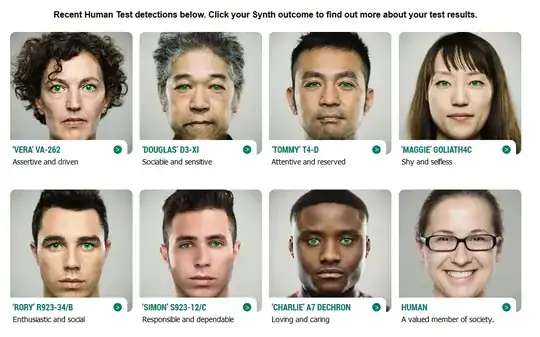
The Vera seen here is not one portrayed by Rebecca Front. This is further evidence that the synths in the show are not all intended to be identical, just similar-looking.


