There are a few options I've used to take cameras on the water canoeing and kayaking, both on flat water and through rapids. Here's the order I've done them in, so you know where I ended up:
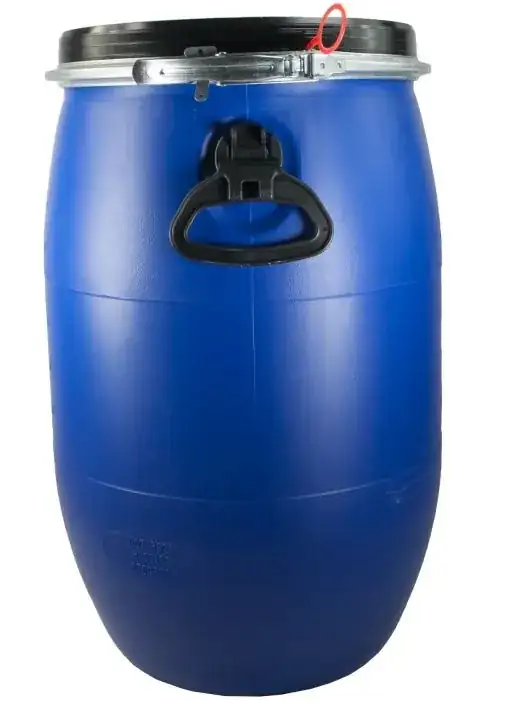
Get a dry bag. (I've used SealLine but there are many manufacturers.) Not one specific to the camera, just a big enough one to fit the camera. Keep the camera in the bag and only pull it out when you want to shoot -- which also means only pull it out when you feel comfortable that you won't drop it in the water! (For example, jet boat coming by? Now might not be the right time to try to get the shot.) I use a big Pelican case when going out in a canoe to shoot seriously; the canoe has a lot more room than a kayak and I can shoot while somebody else paddles and helps hold position.
Get a waterproof camera case. I've used a small Aquapac in the past, and they work ok and have a variety of sizes of available. On the higher end, Panasonic also makes an underwater housing for that camera, which represents a step-up in both waterproofness and ease of use over the more generic bags.
Keep this camera on shore and get a waterproof camera. Certainly the safest option, and this is the route I typically take to just get some snaps of the outing.
If I'm aiming to get some good photos while on the water I go in the canoe with the DSLR and a bag full of lenses. The kayak doesn't offer enough stability while trying to move around to get into position, however worse is that the kayak will move when I'm trying to get the shot. In a canoe I can have some help paddling, and they can be responsible for holding position while I get shots. Throwing gear in a dry bag sounds ok but is impractical for the "big" DSLR gear where I want several lenses and other assorted doodads, which means I have a camera bag to force into the dry bag, and pull out, too. It becomes a hassle to get a bag in/out of a bag to get at gear and you quickly look for shortcuts: "I don't need to seal the dry bag this time," which is of course a guarantee that this is the time you need to seal it. The Pelican case has foam that can be cut to fit gear, and then clicking the lid shut seals it, making for a much more efficient and less frustrating experience.
For less casual use, such as I expect you'll do with the FZ70, a small bag like from Aquapac is probably all you need. These bags do work, but they are not without disadvantages. Expect a significant loss in image quality by shooting through the bag, as well as a lot of frustration trying to adjust settings with the camera, and maybe even difficulty getting the shutter button itself pressed. These bags are not perfectly sized to your camera so you need to work with the shape of the bag to get at the controls on your camera. You may even need to fiddle with the position of the camera in the bag when you change the zoom just so that you can adequately hold it. If you plan to do any amount of shooting this turns into a frustrating solution.
Of course, the Aquapac bags aren't cheap, and I'm guessing you'll need something for $100+ to fit your camera. Gee, at that point the waterproof cameras don't look quite so expensive when you consider how little frustration you'll have using them... if you can accept the limited capabilities these cameras typically have. (For example, roughly 120mm zoom is the norm on waterproof cameras, as compared to the 1200mm of the FZ70.)
Something else important to consider: tethering your camera to yourself or your boat. If you're reaching out and suddenly drop the camera to grab your paddle or because you flip, you want a way to be sure you don't lose your gear. All of the options I've discussed have lanyard, loops, hooks, or tiepoints of some sort so that you can tether it to your boat or your life jacket.