0

According to the material available in the Internet, Anushāsanaparva is not a part of original Mahabharata. If the above material is correct, then Vishnu Sahasranama, which is a part of Anushāsanaparva, must be a later day addition or interpolation.

Does any subsequent literature to Mahabharata, contain any evidence to this claim in the material?

Srimannarayana K V
  • 17,497
  • 3
  • 38
  • 128
  • 4
    Answer on ur related Q where as per MBH Adi Parva, Anushāsanaparva is not an interpolation..bdw just curious why ur most of the Q/A based on interpolation.. – YDS Sep 18 '20 at 12:46
  • You can name my questions and answers as authored by Interpolation specialist @YDS – Srimannarayana K V Sep 18 '20 at 13:05
  • The original question was closed. This question was posted based on the request of another member in META, to reopen the original question, so that that member can post his answer @YDS – Srimannarayana K V Sep 18 '20 at 13:07
  • 1
    "Interpolation specialist" - well said but sometime pls try to deny interpolation..proving interpolation is very very hard task, it's not something like "i didn't find it in x scripture so it's interpolation"...if it's not found in x scripture then we should look into y, z scriptures instead of labeling as interpolation.. – YDS Sep 19 '20 at 06:12

1 Answers1

11

According to the [Spitzer Manuscript], Anushāsanaparva is not a part of original Mahabharata. If the above material is correct...

Just because a random manuscript doesn't list the Anushasana Parva, doesn't mean it's not there in the original Mahabharata!

Moreover, this manuscript is not reliable because of how it was found:

The Spitzer Manuscript was found in 1906 in the form of a pile of more than 1,000 palm leaf fragments in the Ming-oi, Kizil Caves, China during the third Turfan expedition headed by Albert Grünwedel.[7][8]

So there could be some lost fragments.

We also don't even know who the scribe of the Spitzer manuscript is, hence we cannot verify the credibility or accuracy of this manuscript.

But if you continue reading, the wikipedia article will also say:

According to Indologist and Sanskrit scholar John Brockington, known for his Mahabharata-related publications, the table of contents in the Spitzer Manuscript includes book names not found in later versions, and it is possible that the parvas existed but were with different titles. The epic known to the scribe of Spitzer Manuscript may have been in the form of a different arrangement and titles.

So it is possible the Anushasanaparva was there, just under a different title.

Also, the critical edition of the Mahabharata has the Anushasana parva, so it is possible the Anushasana parva was redacted from the Spitzer manuscript.

Evidence acquired from comments:

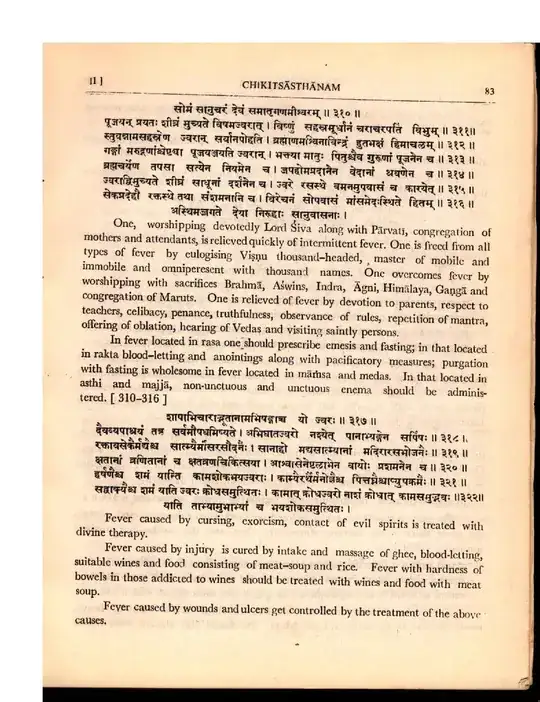
Charaka Samhita, Chikitsasthanam: Chapter 3 – Treatment of jvara (Fever), Verse 311 विष्णुं सहस्त्रमूर्धानम् चराचरपतिम् विभुम् | स्तुवन्नामसहस्त्रेण ज्वरान् सर्वनपोहति || Meaning: Recitation of Sahasra nAma of Lord Vishnu, who is the chief of all moving and non-moving things of the universe and who is omnipresent, cures all types of jvara(fever).
enter image description here

brihat parashara hora shastra, most followed treatise of astrology has two instances. 1. Chapter 56 verse 31 तद्दोषपरिहारार्थं विष्णुसाहस्रकं जपेत् । आयुर्वृद्धिकरं चैव सर्वसौभाग्यदायकम् ॥ ३१॥ 2. Chapter 59 verse 79 तद्दोषपरिहारार्थं विष्णुसाहस्रकं जपेत् । ततः सुखमवाप्नोति श्रीहरेश्च प्रसादतः ॥ ७९॥

तद्दोषपरिहारार्थं विष्णुसाहस्रकं जपेत्

Meaning is: "For the purpose of removal of faults, one should chant the Vishnu Sahasranama."

Ikshvaku
  • 22,130
  • 2
  • 39
  • 116
  • Comments are not for extended discussion; this conversation has been moved to chat. – Pandya Sep 19 '20 at 08:02
  • Just a point to note .Vishnu Sahsranama does not have to mean the one found in Mahabharat. Such Sahasranams are found in other scriptures too like Puranas. So when one scripture says "one has to recite the Vishnu Sahsranama" it may not be referring to the one found in Mahabharata unless specified. – Rickross Sep 19 '20 at 09:12
  • @Rickross: You are right. Though I had this doubt lingering in my mind, I accepted this answer, as it's reference was found in Charaka Samhita, which is very old. – Srimannarayana K V Sep 19 '20 at 10:08
  • @Rickross I don't think there is any other Vishnu Sahasranama except the well-known Vishnu Sahasranama of the Anushasana Parva: https://en.m.wikipedia.org/wiki/Vishnu_Sahasranāma – Ikshvaku Sep 19 '20 at 10:13
  • @Rickross. Just curious,Are you shakta/shaiva? – Satya Sep 19 '20 at 10:17
  • @Ikshvaku Haha .. there is one in Padma Purana, another one in Skanda Purana. Probably there are more in other Puranas (probably someone said to me that there is one in Garuda Purana too but not sure). See this -- http://www.kamakoti.org/kamakoti/articles/Trividha%20Vishnu%20Sahasranama.html – Rickross Sep 19 '20 at 10:33
  • 1
    @Rickross Ok, valid point, but since there are multiple vishnu sahasranamas, I think any mention of "vishnu sahasranama" in any text refers to the well-known vishnu sahasranama (of Bhishma). Because when ones says "vishnu sahasranama", he thinks of the one by Bhishma and not any other. – Ikshvaku Sep 19 '20 at 10:51
  • I consider all these Sahasranamas as authentic but on what basis are you saying that people must think of the one found in MB when anyone talks about Vishnu Sahsranama? That's not a valid point at all. @Ikshvaku – Rickross Sep 19 '20 at 10:54
  • 1
    @Rickross, True that's not a valid point. Generally epics have more importance than puranas. So a sahasranama could be that of an epic considering it being celebrated in other texts as well. Only a possibility. I think no orthodox follwer of vedanta consider VS as an interpolation, since Adi Shankara himself wrote a commentatory on it. – Satya Sep 19 '20 at 11:10
  • @Satya: Please don't drag Adi Shankara (500 BCE) into this issue. Many works attributed to Adi Shankara were stated to have composed by Abhinava Shankara of 8th century AD. – Srimannarayana K V Sep 19 '20 at 11:12
  • @Rickross Because that is the most famous one, is it not? Especially since the time of the Mahabharata war. Also are the other vishnu sahasranamas in the puranas the same as the bhishma one? – Ikshvaku Sep 19 '20 at 11:19
  • Generally epics have more importance than puranas -- No that is neither a valid point because Itihasa-Purana have similar importance and most of the times are mentioned together @Ikshvaku – Rickross Sep 19 '20 at 11:19
  • @Rickross I didn't make that comment about the itihasas being greater than the Puranas, user Satya did. – Ikshvaku Sep 19 '20 at 11:20
  • @Ikshvaku I replied to you above. But tagged the wrong user. Itihasa and Purana are similar nature texts and have similar scriptural authority. – Rickross Sep 19 '20 at 11:21
  • @Rickross Sure, but still, people are more familiar with MB sahasranama than ones from other texts. Why do you think we Vaishnavas recite that only? It is the most famous. – Ikshvaku Sep 19 '20 at 11:22
  • I am not aware which the Vaishnavas recite the most and why but there are more than one such Stotras and all of them can be recited @Ikshvaku Unless someone specifies we can't be sure which one is being talked about – Rickross Sep 19 '20 at 11:27
  • @Srimannarayana K V. Discussion is going too far, this would be my last comment on this topic. Sringeri matham is the only one without unbroken guruparampara the date it gives is 820 CE. 500BCE makes him a near contemporary of buddha, he comes from Kumarila Bhatta who came long after budha. These are unwanted topics that provokes debate better to end here. – Satya Sep 19 '20 at 11:34
  • I didn't start this topic. It was you, who mentioned about composition of commentary on VS by Adi Sankara and countered it. If you don't want to prolong it, let us stop here @Satya – Srimannarayana K V Sep 19 '20 at 11:39
  • @idol worshipper. It is interesting how you yourself having this view still supporting question put forth by rickross. Ayurveda and jyotisha both are considered as upavedas, most probably earlier than puranas could cite VS from mbh only. As far as OP is concerned he do not believe in Puranas. I will try to further update answer. – Satya Sep 19 '20 at 15:23