11

I have an electric oven which has a temperature setting, starting at 50c and goes up in 5 degree increments; [50,55,60,65,...]. It also has a fan to circulate air. (pictured below)

Will this be accurate/stable enough to do sous-vide? I'm asking about modern domestic electric ovens in general as opposed to my particular brand (whirlpool).

If I put my bagged meat in to a pot of, say 65deg water, and put it in the oven set for 65deg. Will the water ever get more than a degree or two above 65?

I suspect that even if the oven fluctuates +-10deg, the thermal mass of the water won't allow it's contents to fluctuate in temperature change so much, assuming of course that the oven will average at 65deg.

Has anyone tried sous-vide with their oven, or are the thermostats so inaccurate that it not likely to work?
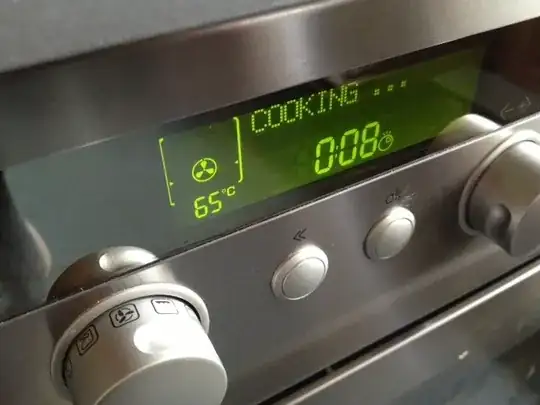
enter image description here

Ken
  • 713
  • 4
  • 8
  • 18

7 Answers7

8

Accuracy of the temperature is going to vary by oven, so there's no definitive answer there. As GdD said, you'll just have to get a thermometer and try it.

However, I think this will probably work fine for most sous vide applications. While sous vide is all about precision, a couple of degrees fluctuation isn't going to make a huge difference for most preparations (eggs are a notable exception), particularly given the thermal mass of the water. You could also throw a pizza stone or something in the oven too to help keep a more constant temp.

yossarian
  • 19,079
  • 29
  • 101
  • 155
4

As for accuracy that's not something this forum can say. If the oven is accurate and the temperature does not fluctuate more than a few degrees then yes it would be accurate enough, but if the fluctuations are more then no. The only way to find out is to get a very accurate oven thermometer and test it.

Sous vide cooking requires water to be flowing around the food which is why sous vide machines have a water pump to keep the heat evenly distributed. In an oven pot you'd likely got hot spots and cold spots as there won't be any circulation besides convection, which may not be enough. Without some sort of pump you'd probably get uneven cooking.

GdD
  • 78,732
  • 3
  • 145
  • 260
4

Of course you can use your oven for cooking sous-vide, though you will not get very precise temperature control and will pay a higher electricity bill than if you use a water bath. I would not use it for long cooking periods at a limit temperature where safety can be jeopardized (around 55ºC) or when high precision is required (e.g. eggs), but otherwise it's perfectly doable.

You must play with your oven model until you find the best settings, usually 10 or 20 degrees C higher than the desired water temperature. Using a heavy pot such as a dutch oven will also help to maintain the temperature.

The technique is analyzed in detail here: http://sousvide.wikia.com/wiki/Give_Sous-vide_a_try_without_buying_expensive_equipment

DorarNoSella
  • 121
  • 2
3

Oven thermostats are very inaccurate, and by design allow very large temparature swings. A heavy pot full of water is a pretty good buffer ... it will even out the temp a bit.

There are precision ovens designed for this, called c-vap and combi ovens. They are expensive and power-hungry and complex. Even these have issues with precision. They are more than good enough for low-temperature cooking a roast, but the imperfect temperature stability causes problems for small things.

paulraphael
  • 319
  • 3
  • 4
1

I believe the answer is you can't use your oven like a sous vide because the physics are very different. Air is a terrible medium for heat transfer while water is one of the best. This is what makes sous vide work.

Evan Zamir
  • 111
  • 1
1

Of corse you can use your oven and the physics do make sense. This type of cooking is different, because you cook in sealed bags that retain all the FOID’s moisture and natural juices. These specialty bags placed in a Pyrex bowl works exactly as the bags placed in a smaller container with circulating water. The “physics are the same. Enjoy.

Stephie
  • 61,426
  • 8
  • 175
  • 226
Dusty
  • 11
  • 1
0

Flexible wire probe thermometer

If you can, get a digital thermometer that has a long probe wrapped in steel wire with a magnet on the back. They are designed to attach to the external door of the oven while measuring the temperature of a roast in-situ. Firmly clamp the probe so that it rests floating in the water (but not touching the dish itself) and attach the thermometer itself to the door or any surrounding metal.

That way you can a) calculate how far out your oven thermostat is and b) see how quickly your bath responds to temperature changes. As a guide, my water circulator increases at ~ 1 degree C per second (when the water cools from set temperature) in a 10 litre bath without insulation at ~ 22-25 C ambient. Your oven I suspect will be a lot slower to respond than this due to the factors others have mentioned. This way it will give you some idea as to how much longer you need to keep your recipe in the bath to compensate.

Once you have conducted these tests, I'd also suggest looking to acquire an enameled pot that you can unscrew the handle from the lid. That way you can insert and place the probe centrally while reducing evaporation. When using the lid in the oven it will assist in keeping the temperature stable.

Greybeard
  • 6,529
  • 4
  • 34
  • 82