13

I have eaten both boiled vegetables and steamed vegetables (e.g. broccoli, carrot, zucchini etc.), and I cannot tell the vegetables are cooked in one way or the other, whether by texture or by taste (unless they are boiled in broth; here, I refer to boiling in water).

Is there a reason why vegetables are preferred boiled to steamed, or vice versa?

Flimzy
  • 2,776
  • 10
  • 32
  • 47
KMC
  • 1,984
  • 5
  • 19
  • 27

4 Answers4

13

To boil vegetables, you add the vegetables to a pot of water, and boil the water for a short duration until the vegetables are sufficiently cooked. One may add salt or other flavorings (such as broth, as you mentioned) to the water prior to boiling.

Steamed vegetables are cooked in a steamer basket, where the vegetables are not in the water, but are instead sitting above the water, and are thus cooked by steam.
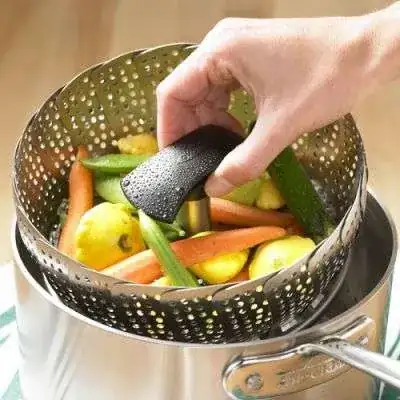
enter image description here

Salt must be added to steamed vegetables after they are cooked rather than to the water prior to cooking, since salt does not evaporate.

Steamed vegetables can retain more of their original flavor and nutrients, since they do not leech out into the water during boiling. On the other hand, you cannot add additional flavors to your vegetables during steaming--since flavors cannot soak into the vegetables from the water, either.

Which taste/texture you prefer, of course, can be a matter of personal opinion.

In my experience, boiled vegetables are often mistakenly referred to as steamed vegetables. And often, many restaurants will sell "steamed vegetables" which are really just microwaved frozen vegetables, which may strictly be steamed (it certainly isn't boiled!), but really bears little resemblance to the true steaming process (and has relatively poor flavor, as well).

Flimzy
  • 2,776
  • 10
  • 32
  • 47
0

Steaming vegetables retain their natural flavor and nutrients. Boiling vegetables leave the vegetables tasteless and bland. Most chefs will then add salt and butter.

-1

The flavor does evaporate if they reach boiling point. It's the temperature at which molecules get enough energy to "fly" and circulate. For example, the flavour of many spices is given by volatile compounds that "fly" even at room temperature. There are many other examples of volatile compounds in liquids. In those cases, flavor can be given (or taken, depending on the point of view) by the steam formed in the process

-1

You Can Add Flavour to The food being Steamed. For example Steaming Mussels in Beer or wine you can also add thing to the bottom steaming pot such as blue cheese onions pepper, and those flavours will end up in the mussels in the top. and some of the Mussel flavour ends up in the bottom pot which happens to make a very nice soup.