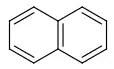
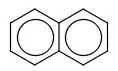
Questions about why we represent things in one way or another are hard to answer in general, because they appeal to one’s sense of taste… de gustibus non est disputandum. Here, I want to state the position and the reasoning of IUPAC on this matter. The relevant publication on this are the IUPAC 2008 Recommandations, titled Graphical representation standards for chemical structure diagrams (IUPAC Recommendations 2008) [1].
Section GR-6 of the report deals with “Aromatic rings and other types of electron delocalization”. I quote part of it (emphasis is mine):
GR-6.5 Curves should only be used when delocalization is being represented
Curves represent delocalization, yet lots of structures have some delocalized elements. Although all such elements could be depicted with curves, there is little gained by doing so. On the contrary, the arbitrary use of curves can draw the viewer’s attention to insignificant portions of a structural diagram, and away from areas that are chemically more important such as an active site or a reactive group. Accordingly, curves should only be used when the delocalization is specifically being highlighted as an important feature of the structure.
When curves are not used, any alternating configuration of double bonds is acceptable within the further constraints discussed in GR-3.5.

The text then goes further to note:
It is generally not acceptable to use curves in two adjacent fused rings, since such diagrams are at best ambiguous in terms of the character of the shared fusion bond between the two rings.
- Graphical representation standards for chemical structure diagrams (IUPAC Recommendations 2008), Pure Appl. Chem., 2008 DOI: 10.1351/pac200880020277
PS: hmm, the leader for the IUPAC report works at CambridgeSoft…