Sulfur hexafluoride ($\ce{SF6}$) is, according to the Wikipedia page, a hypervalent substance. However, according to the page in regards to $\ce{SF6}$ reactions:
There is virtually no reaction chemistry for $\ce{SF6}$. The main contribution to the inertness of $\ce{SF6}$ is the steric hindrance of the sulfur atom, whereas its heavier group 16 counterparts, such as $\ce{SeF6}$ are more reactive than $\ce{SF6}$ as a result of less steric hindrance
The linked steric hindrance provides many examples of how that chemical process works, but specifically, what steric hindrance (or any other) mechanism results in $\ce{SF6}$ possessing virtually no reaction chemistry?

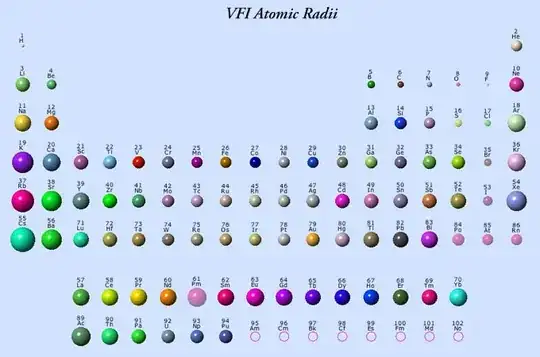 Sulfur (16) is significantly smaller than Se (34). That size difference
means that there is more room between the fluorine atoms on Se than on
Sulfur. That is what steric hindrance means. Think of steric hindrance
as limited access. The smaller the atom the less access there is.
Oxygen is so small that less than 6 fluorine atoms can crowd around it
because of steric hindrance... probably more like four.
Sulfur (16) is significantly smaller than Se (34). That size difference
means that there is more room between the fluorine atoms on Se than on
Sulfur. That is what steric hindrance means. Think of steric hindrance
as limited access. The smaller the atom the less access there is.
Oxygen is so small that less than 6 fluorine atoms can crowd around it
because of steric hindrance... probably more like four. 
