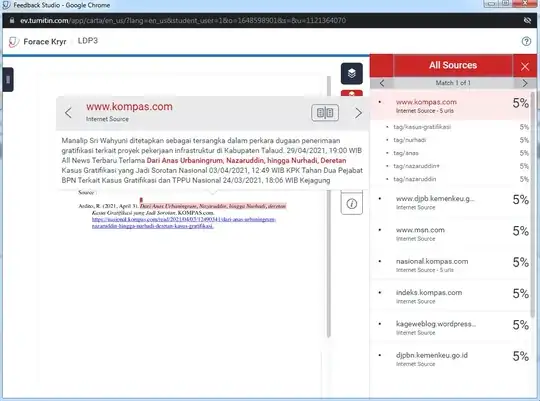
Here is how me and my colleagues use plagiarism checkers: we get a list of submission and their "plagiarism score":
Anything scoring below a certain threshold, we don't even bother. After all, we expect references, titles, and some definitions to get flagged.
If your score is high, we will look at the report. Often, it is someone with many references, or a properly quoted paragraph, which are both examples of false positives.
Plagiarism checkers are dumb as a box of owls. Their number means nothing, and needs to be inspected. They usually don't understand the context well enough to distinguish plagiarism from quotes, more so in languages other than English.
Literal copies, aka copy and paste (c&p) plagiarism or blatant copyright infringement, or modestly disguised plagiarism cases can be detected with high accuracy by current external plagiarism detection software if the source is accessible to the software.
And frankly, they are not that hard to defeat, even for a lazy student (for example, Google Translate back and forth through an intermediate language); but even without the checker, when a paragraph is written in a different "voice" it stands out a lot. For example, the previous paragraph, was copied from the Wikpedia page on plagiarism detection, and I think will jump to most people: it both has a different style, and the content doesn't exactly fit with the rest of the flow.
(In case it wasn't obvious: I am not very impressed with the performance of plagiarism checkers).