We made some pretty good windows for our gingerbread house this year, by putting crushed boiled sweets (hard candy) in the cut holes for the last few minutes of baking.
But since then they've absorbed enough moisture (at least I assume that's what happened) to run and in some cases collapse.
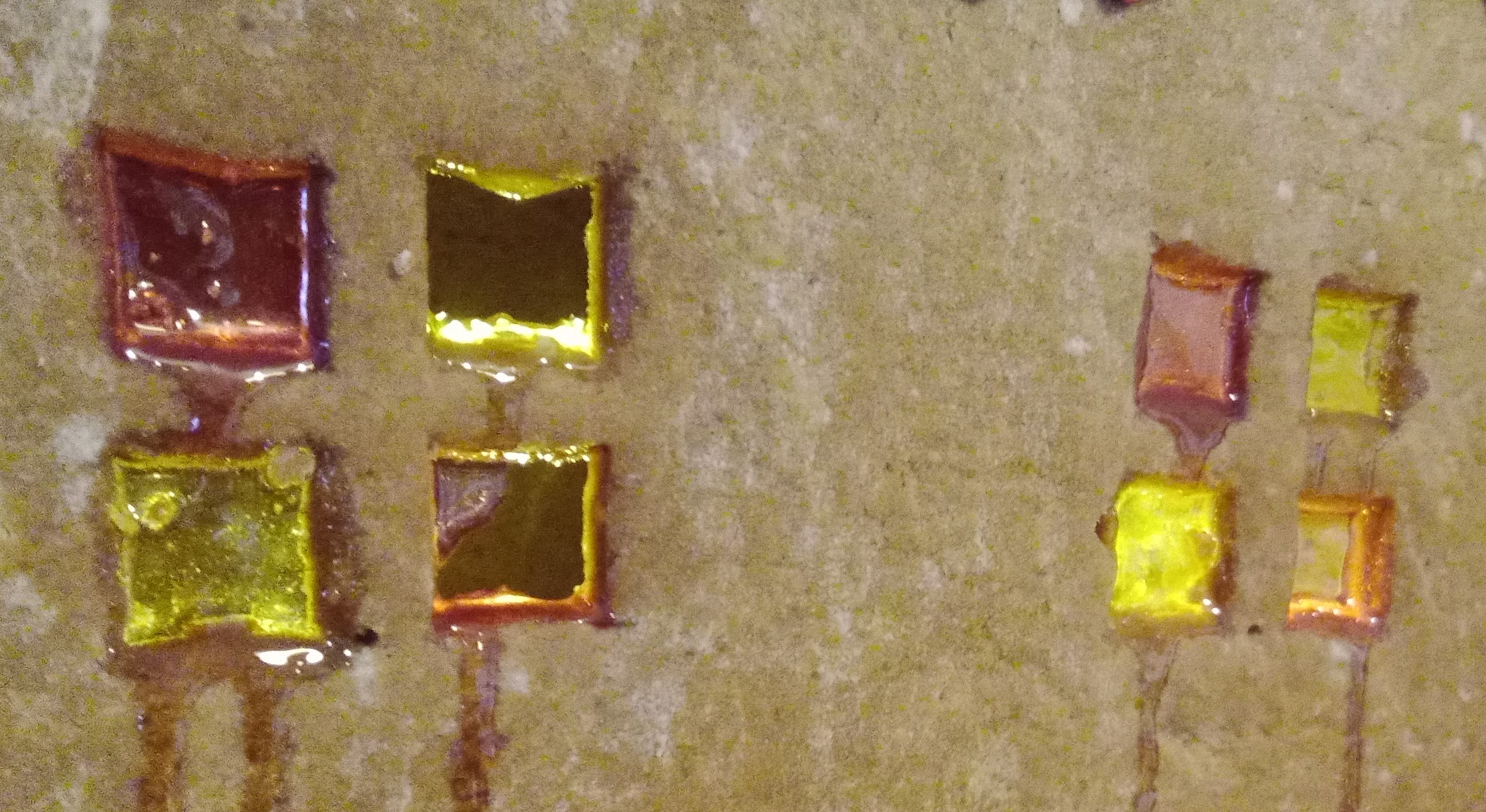
We've had some unusually cold weather recently, followed by a thaw and damp weather, so the humidity indoors has got quite high (especially at night when the heating is off). This probably hasn't helped. I have a dehumidifier, but cooking steam followed by cold nights can get a bit much for it. Currently the relative humidity is about 65%, and the windows feel slightly tacky. The way the windows look like they're crying indicates deliquescence, which requires over 85% RH at 15°C - possible if the temperature fell overnight after steamy cooking.
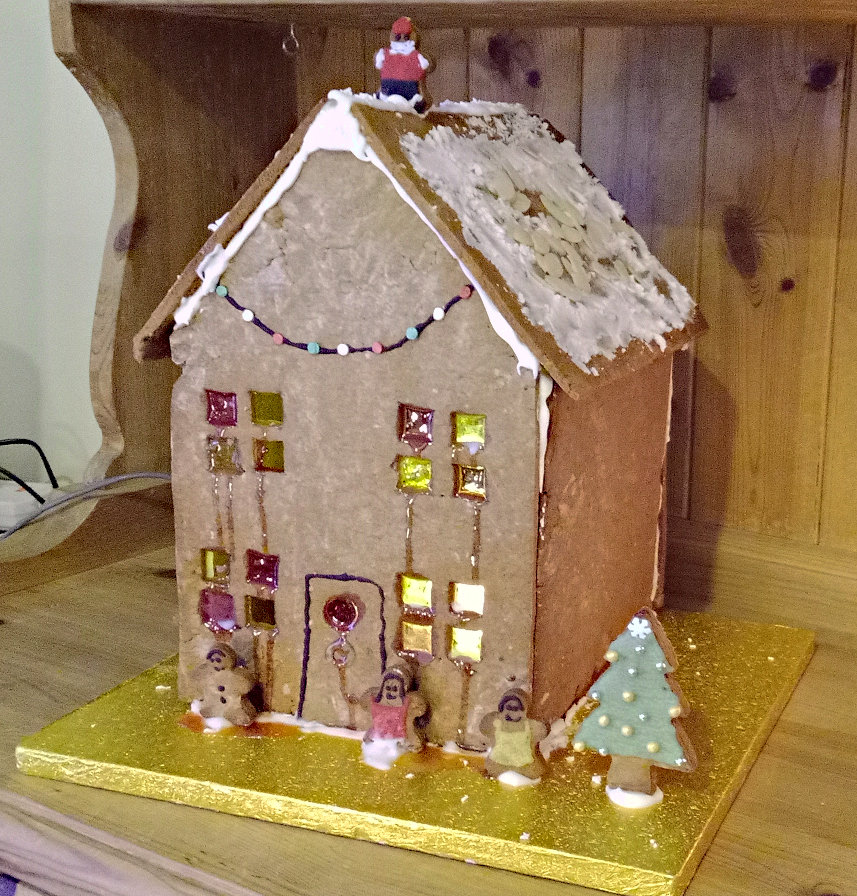 Here's the whole house - under-decorated in my opinion, but I'm not in charge of decoration. This is after applying melted coconut oil to the bottom left and top right panes, and all 4 lower right panes (see WillK's answer)
The appearance of these windows was just what we were going for, but is there a way to make them last longer if indoor humidity can get quite high? Ideally this would be a vegetarian (no gelatine) change to the ingredients, or something in the process of making it.


